Mud Season, Dry Land, and Dogs: Inside the Year-Round Grind of Canada's Toughest Mushers
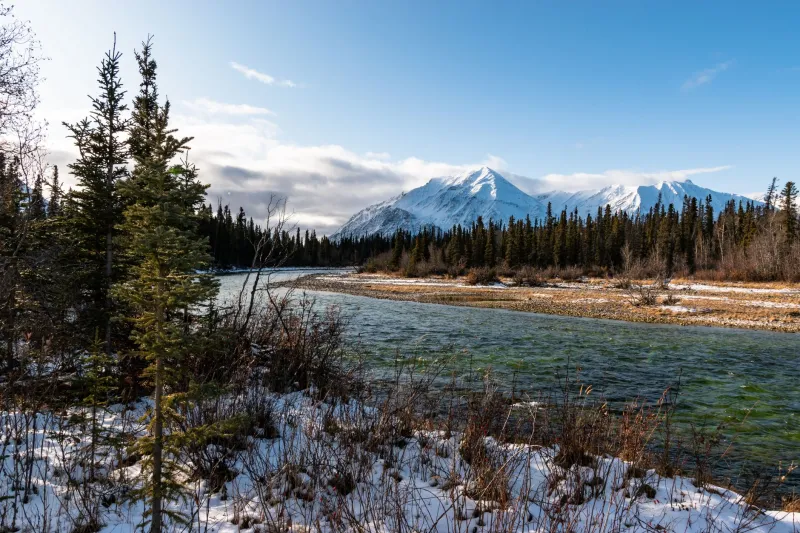
Most people picture the Yukon Quest as a February thing — frozen rivers, headlamps cutting through the dark, mushers hunched into the wind somewhere north of Dawson City. And sure, that's when the race happens. But ask any serious Canadian competitor and they'll tell you the same thing: the Quest is a twelve-month commitment. The race is just the final exam.
We spent time with four Canadian mushers — from the Yukon's Whitehorse corridor to northern British Columbia — to get an honest look at what off-season training actually looks like. What we found was part endurance sport, part animal husbandry, part wilderness philosophy, and entirely unlike anything you'd find at a conventional gym.
Running on Dirt: Summer Training When There's No Snow
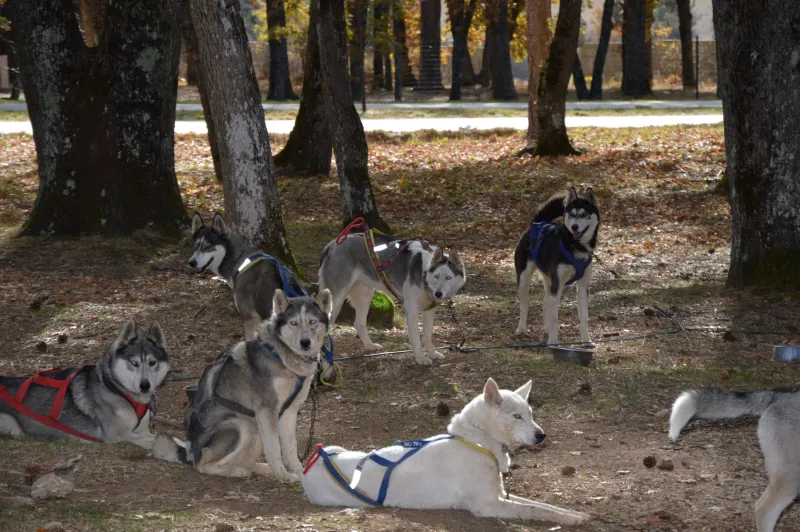
For Kelsey Drummond, a musher based outside of Haines Junction, Yukon, the off-season starts before the snow even melts. By May, she's already shifting her dogs onto a dry-land conditioning programme — using wheeled rigs called training carts pulled by teams across gravel roads and forest service trails.
"People think the dogs just rest all summer," she says, laughing. "They'd go absolutely sideways if I let that happen. These are working dogs. They need structure."
Dry-land training serves a dual purpose: it keeps the dogs aerobically fit through the warmer months and lets mushers evaluate each animal's gait, attitude, and team chemistry without the complicating factor of snow. Drummond logs her dogs' performance in a spreadsheet, tracking things like paw health, appetite, and what she calls "head position" — an informal measure of how mentally engaged each dog seems during a run.
For her own fitness, Drummond runs trails in the St. Elias foothills, paddles the Dezadeash River system, and does what she describes as "a lot of carrying heavy things up hills." There's no structured strength programme, no personal trainer. "The North doesn't care about your bench press," she says. "It cares about whether you can function after three days without sleep."
Breeding for the Long Game
Up near Atlin, BC, musher Travis Lepage has spent the better part of a decade developing what he calls his "Quest line" — a selective breeding programme designed specifically to produce dogs capable of thriving in the extreme conditions of the northern race circuit.
The Yukon Quest is notoriously harder on dogs than most other long-distance races. The checkpoints are fewer, the terrain is more punishing, and the weather can swing from manageable to life-threatening within hours. That means Lepage isn't just breeding for speed — he's breeding for recovery rate, paw toughness, coat density, and what mushers broadly call "desire."
"Desire is huge," he says. "You can have the most physically gifted dog on the planet, but if it doesn't want to be out there at mile 600, it's a liability."
Lepage evaluates puppies starting at around eight months, watching how they interact with harnesses, how they respond to correction, and whether they show what he calls "forward pull" — an almost instinctive urge to lean into the load. Promising animals stay in the programme. Others are rehomed as pets. It's a slow process, and Lepage is the first to admit he's still learning.
"Every litter teaches you something. I've bred dogs I thought were going to be superstars and they flamed out at 200 miles. I've had dogs I almost gave away who turned out to be my best leaders."
The Mental Side Nobody Talks About
If there's an underreported aspect of Quest preparation, it's psychological conditioning. Finishing the race — let alone placing well — requires mushers to make high-stakes decisions under extreme sleep deprivation, in the dark, in temperatures that can drop to -50°C. That's not a physical challenge. That's a cognitive one.
Natasha Bélair, a Francophone musher from the Lac-Saint-Jean region of Québec who relocated to the Yukon six years ago to pursue competitive mushing full-time, works with a sports psychologist during the off-season. She's candid about the stigma that still exists around mental performance coaching in outdoor sports.
"In team sports, it's normal. In hockey, everyone has a mental coach. But in mushing, there's still this idea that you just tough it out," she says. "That's fine until you're on the Blackstone Plateau at three in the morning and you can't remember if you fed your dogs."
Bélair's mental training focuses on decision-making frameworks — essentially pre-committing to certain choices before fatigue sets in. She and her psychologist work through scenarios: What do you do if your lead dog goes lame at a remote section? What's your threshold for scratching? Having those answers ready before the race means she's not trying to reason through them when her brain is running on fumes.
Nutrition, Recovery, and the Art of the Nap
Rounding out our group is Cody Whitefish, an Indigenous musher from the Champagne and Aishihik First Nations whose family has deep roots in the traditional use of sled dogs across the southern Yukon. For Whitefish, training is inseparable from a broader relationship with the land — one that doesn't really have an off-season in the conventional sense.
"My grandfather used dogs to travel and to work. That connection doesn't stop," he says. "I'm always learning from the land. That's part of my preparation."
On the practical side, Whitefish pays close attention to his own nutrition and sleep cycles in the months leading up to the race. He's experimented with sleep deprivation training — intentionally running on reduced rest during long training runs to teach his body (and mind) to function below optimal. He's also meticulous about his dogs' diet, working with a veterinary nutritionist to dial in caloric intake as training volume increases through the autumn.
"The dogs are athletes. You wouldn't feed a marathon runner fast food the week before a race," he says. "Same principle."
What It All Adds Up To
Four mushers, four approaches, one shared understanding: the Yukon Quest is not something you survive on talent alone. The race demands a kind of sustained, whole-life commitment that most sports simply don't require. Training runs happen in the rain, in the dark, in the mud. Breeding decisions play out over years. Mental preparation starts in the quiet months when nobody's watching.
And when February finally comes, and the start line fills up in Whitehorse or Fairbanks, all of that invisible work becomes the foundation everything else is built on.
Race hard. Run wild. But first — put in the work.