Where the Trail Meets Memory: The Living History Hidden Along the Yukon Quest Route
There's a moment that happens at almost every Yukon Quest checkpoint. A musher pulls in, exhausted, and a volunteer — someone who has been standing in the cold for hours, maybe longer — hands them something warm. Coffee, soup, whatever's going. There are no cameras on this exchange. Nobody's broadcasting it. But it might be the most important thing that happens in the entire race.
The checkpoints of the Yukon Quest are not just logistical stops. They are, in many cases, the last remaining heartbeats of communities that once defined the Canadian and Alaskan North. To travel the Quest route is to move through layers of history — Gold Rush fever, Indigenous trade networks, missionary outposts, telegraph lines, and the slow retreat of populations that followed when the easy money dried up. The race didn't create these places. It found them, and in doing so, gave them a new reason to keep the lights on.
Dawson City: Gold, Ghosts, and the Halfway Point
If any single checkpoint on the Quest route carries the weight of myth, it's Dawson City. Situated at the confluence of the Yukon and Klondike rivers, Dawson was once the largest city west of Winnipeg — a staggering fact to absorb when you're standing on its quiet main street in February. At its peak during the Klondike Gold Rush of the late 1890s, it housed close to 40,000 people. Today, the permanent population hovers around 1,400.
But Dawson doesn't feel diminished. It feels distilled. The buildings that remain — many of them leaning gently into the permafrost, preserved by the Parks Canada designation that covers much of the townsite — carry a particular weight. The Palace Grand Theatre. The Commissioner's Residence. The rows of false-fronted storefronts along Front Street.
For longtime Quest volunteer Marg Steele, who has worked the Dawson checkpoint for over fifteen years, the race's arrival each February is something close to a civic event. "It's the biggest thing that happens here all winter," she says. "People come out of the woodwork. Folks you haven't seen in months show up to watch the teams come in."
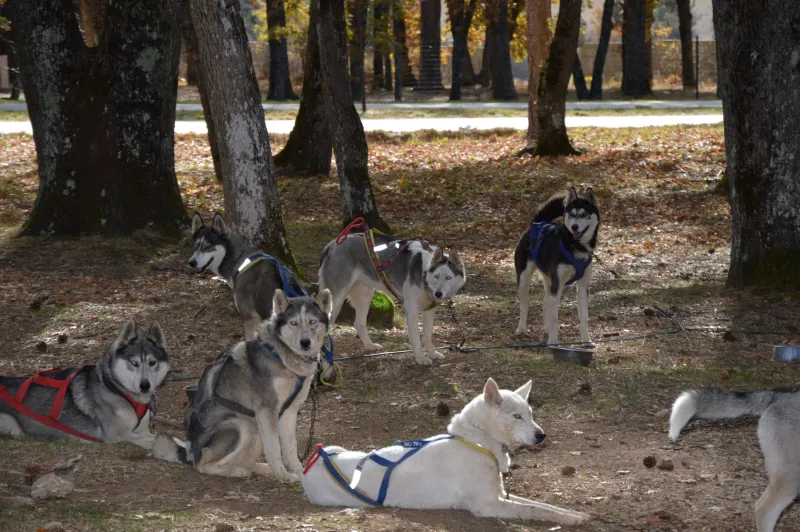
Dawson also marks the mandatory 36-hour layover for all Quest teams — a rule that transforms the checkpoint into something more like a base camp. Mushers sleep, eat, and tend to their dogs while the town, in a sense, tends to them. Local restaurants stay open late. Volunteers rotate in shifts. The Yukon River, frozen solid underfoot, becomes a staging ground for a dozen teams at once.
The Tr'ondëk Hwëch'in and the Land Beneath the Trail
What's easy to miss in the Gold Rush narrative — and what the Quest, at its best, helps to surface — is the fact that Dawson City was established on the traditional territory of the Tr'ondëk Hwëch'in people, who had lived and travelled these river corridors for millennia before the first prospector arrived.
The Tr'ondëk Hwëch'in's own trails and travel routes predate the Quest route by generations. Their knowledge of the land — where to cross rivers safely, where the weather shifts, where the animals move — is the kind of intelligence that no amount of modern GPS can fully replicate.
Ellen Charlie, a Tr'ondëk Hwëch'in elder who has observed the Quest for many years, puts it plainly. "This land has always been travelled. The dogs, the people moving across it — that's not new. What's new is the race around it."
Several Quest mushers, including Cody Whitefish (profiled in our companion piece on off-season training), have spoken about the significance of running trails that their ancestors used for entirely different purposes. For them, the Quest is not just a competition. It's a form of cultural continuity.
Braeburn Lodge: A Dot on the Map with Enormous Cinnamon Buns
Not every checkpoint carries the gravity of Dawson City. Some are beloved for far more immediate reasons.
Braeburn Lodge, located roughly 100 kilometres north of Whitehorse along the Klondike Highway, is technically a roadhouse — one of the last operating examples of a tradition that once dotted the entire North, providing shelter and food to travellers, trappers, and mail carriers moving between communities.
It's also famous, in Quest circles and well beyond, for its cinnamon buns. They are, by most accounts, the size of a dinner plate, and they have become something of a pilgrimage item for anyone travelling the highway. The lodge has operated continuously since the 1940s, and the current owners have maintained the same stripped-back, no-nonsense hospitality that roadhouses were built on.
For mushers arriving at Braeburn during the race, it represents something psychologically significant: the first major checkpoint out of Whitehorse, proof that the race has truly begun. For volunteers, it's a chance to offer something tangible — warmth, food, a few minutes of human connection — to people who are about to disappear back into the wilderness.
Carmacks and the Five Finger Rapids: Where the River Does the Talking
Further along the route, the community of Carmacks sits at a bend in the Yukon River named after George Carmack, one of the men credited with triggering the Klondike Gold Rush. But the area's history runs considerably deeper than that particular footnote.
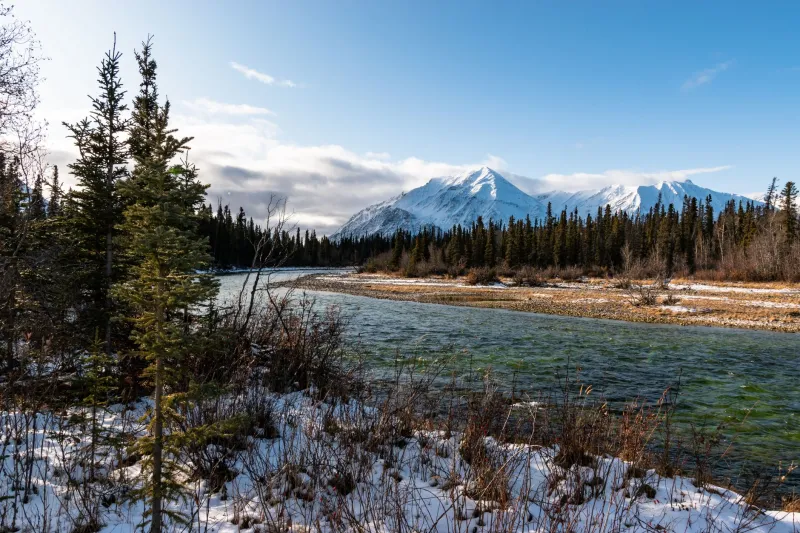
The Little Salmon/Carmacks First Nation has called this river corridor home since time immemorial, and the community today is actively engaged in cultural preservation work that intersects, in interesting ways, with the Quest's passage through the area. Local knowledge about river ice conditions, for instance, is not just historical curiosity — it's operationally critical information for race officials and mushers navigating the notoriously unpredictable Five Finger Rapids section.
Checkpoint volunteer Raymond Smarch, who grew up in Carmacks, describes the annual arrival of Quest teams as a reminder of what the land is capable of. "People from the south come up here and they can't believe anyone would willingly go out in this," he says, gesturing broadly at the river valley in winter. "But this is just — this is home. The cold is just part of it."
The Volunteers: The Race's Real Infrastructure
Across every checkpoint, from Whitehorse to Fairbanks, the Yukon Quest runs on volunteer labour in a way that few major sporting events do. Checkpoint managers, veterinary teams, communications personnel, food handlers, dog drop coordinators — the list of roles is long, and the majority of people filling them are doing it for nothing more than the experience and the community.
Many have been doing it for decades. Some started as spectators, got pulled in by the atmosphere, and never quite left. A few are former mushers themselves, now contributing to the race from the other side of the checkpoint banner.
What they collectively represent is something the Quest's organizers understand well: the race is not just a sporting event. It is, at its core, a celebration of the communities that built the North — and a commitment to keeping those communities visible, connected, and alive.
The trail doesn't run through history. In a very real sense, it is the history. And every February, a few dozen mushers and their dogs remind the rest of us that it's still worth travelling.