Beyond the Finish Line: How Yukon Quest Champions Build Careers From the Cold
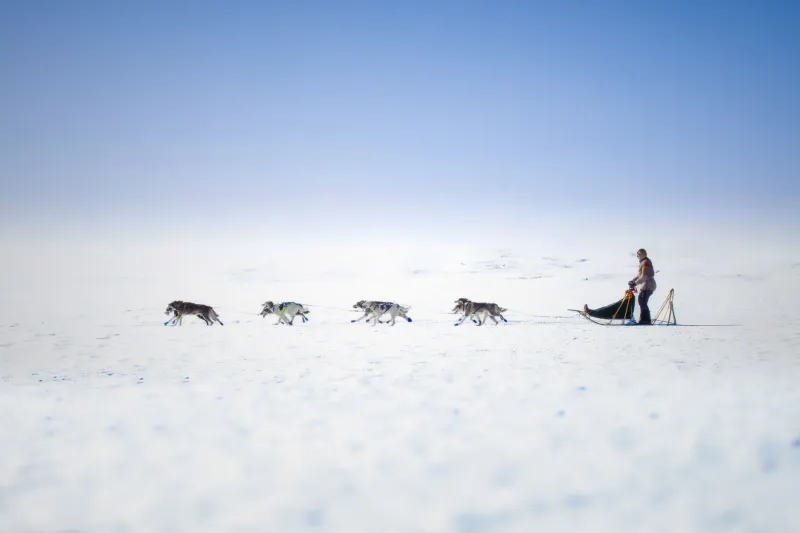
There's a moment, somewhere in the final kilometres of the Yukon Quest, when exhaustion and elation blur into something almost indescribable. A musher, sleep-deprived and frost-bitten, guides their team across a finish line that thousands of Canadians have been tracking from their phones, their living rooms, their offices. The crowd cheers. The dogs bark. And then, quietly, everything changes.
Winning — or even placing well — in the Yukon Quest isn't just a personal triumph. For many of Canada's elite mushers, it's the moment a passion becomes a profession.
The Prize Money Picture
Let's start with the obvious: the cheque. The Yukon Quest International Sled Dog Race has historically offered prize purses that, while meaningful, won't exactly fund a retirement in Kelowna. Top finishers typically share a purse that ranges from roughly $125,000 to $150,000 USD across placements, with the winner taking home the lion's share — often in the neighbourhood of $30,000 to $40,000 USD.
For context, that's a fraction of what elite athletes in mainstream sports earn. But veteran mushers are quick to point out that prize money is almost never the point.
"The cheque helps, don't get me wrong," laughs one former top-five finisher who asked to speak generally about the business side of the sport. "But what that result does for your reputation — that's where the real value is."
The real currency in professional dog sledding is credibility. And the Yukon Quest, widely regarded as the toughest sled dog race in the world, delivers that in spades.
Sponsorships: The Long Game
For mushers who crack the top tier of the Quest, sponsorship conversations tend to follow quickly. Outdoor gear companies, Arctic apparel brands, and Canadian businesses with an eye on the adventure market have increasingly recognized that elite mushers offer something rare: authentic, rugged storytelling that resonates deeply with a Canadian audience.
Past champions have partnered with everything from pet nutrition brands and sled manufacturers to tourism boards and outdoor clothing companies. The deals aren't always flashy — many are in-kind arrangements that cover gear, dog food, or equipment costs — but they add up, and they allow mushers to redirect cash toward what actually runs a kennel.
Running a competitive dog sledding operation is expensive. Feed, veterinary care, equipment, travel, and training costs can easily push into six figures annually. Sponsorships that cover even a portion of those costs can be the difference between continuing in the sport and walking away.
"A lot of people don't realize how much it costs just to show up at the start line," explains one musher who has leveraged their Quest results into a multi-year partnership with a Canadian outdoor brand. "When you finish well, sponsors see that you're serious. They want their name attached to someone who can actually perform."
Media Attention and the Canadian Public
The Yukon Quest has a passionate following across Canada, and a strong race result can land a musher in unexpected places. National media outlets, CBC radio segments, outdoor adventure podcasts, and social media features all funnel attention toward top finishers in the days and weeks after the race.
That visibility matters. Mushers who communicate well — who can tell the story of their dogs, their training, and their experience on the trail — tend to build audiences that stick around long after the race ends. Instagram followings grow. YouTube channels find subscribers. And suddenly, a musher from a small community in the Yukon or northern British Columbia has a platform.
Some have used that platform to launch guided dog sledding experiences, turning their kennels into tourism operations that draw visitors from across Canada and around the world. Others have pursued motivational speaking, bringing their stories of endurance and leadership to corporate events and schools. The Quest, it turns out, is a masterclass in resilience — and that story sells.
Building a Brand in the Bush
Perhaps the most striking thing about the mushers who've successfully turned their Quest results into sustainable careers is how intentional they are about it. They treat their kennels like small businesses, their social media like marketing channels, and their race results like a portfolio.
One champion who now runs a thriving kennel-based tourism operation in the southern Yukon describes the shift in thinking clearly: "After my first strong finish, I realized people were genuinely curious about this life. They wanted to know how we train, what the dogs eat, what it feels like out there at 3 a.m. in minus-forty. I started sharing that, and it built something real."
That authenticity is a significant advantage. In an era when audiences are increasingly skeptical of polished, manufactured content, a musher posting raw footage from a training run or an honest account of a tough checkpoint resonates in a way that most brand campaigns can't manufacture.
The Road Is Long, But It's Worth It
None of this happens overnight. Most mushers spend years — sometimes decades — competing before a breakthrough result changes their trajectory. The Yukon Quest demands that kind of long-term commitment, and the sport doesn't reward shortcuts.
But for those who put in the work, who train their dogs through the long northern summers and push through the brutal winters, the payoff can be more than just a trophy. It can be a life.
As one past champion puts it: "I never got into mushing to make money. But I got into it because I couldn't imagine doing anything else. The Quest gave me a way to do what I love and build something around it. That's not nothing. That's everything."
Where the trail meets the wild, it turns out, there's also a future waiting.