The Dog Knows First: Why the Yukon Quest Can't Be Solved With a Smartphone
We live in a country that has largely decided technology is the answer to wilderness. There's an app for trail navigation, a satellite messenger for emergencies, a GPS unit for every snowmobile dash. Canada's outdoor industry has enthusiastically embraced the idea that the backcountry is safest when it's most connected. And for a lot of pursuits, that's probably true.
The Yukon Quest doesn't care about any of that.
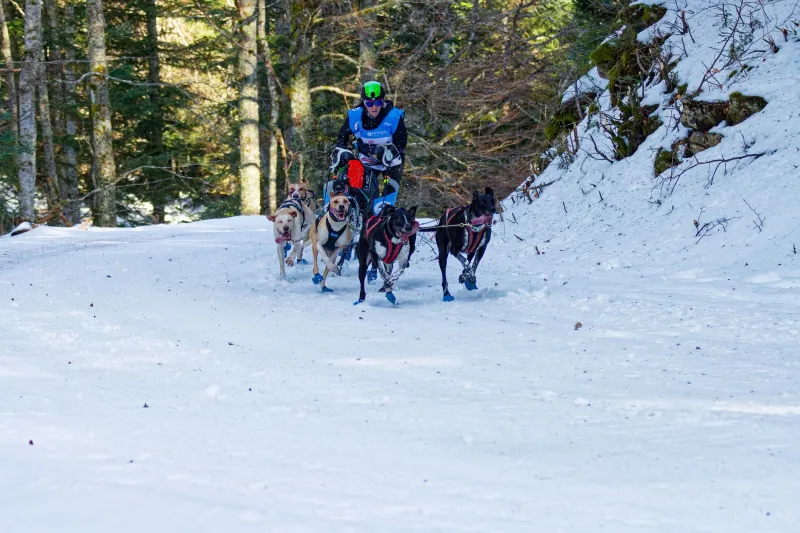
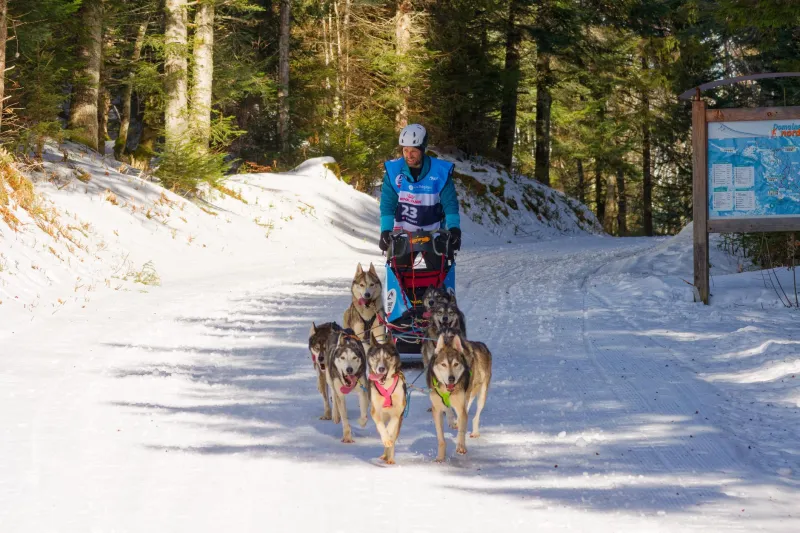
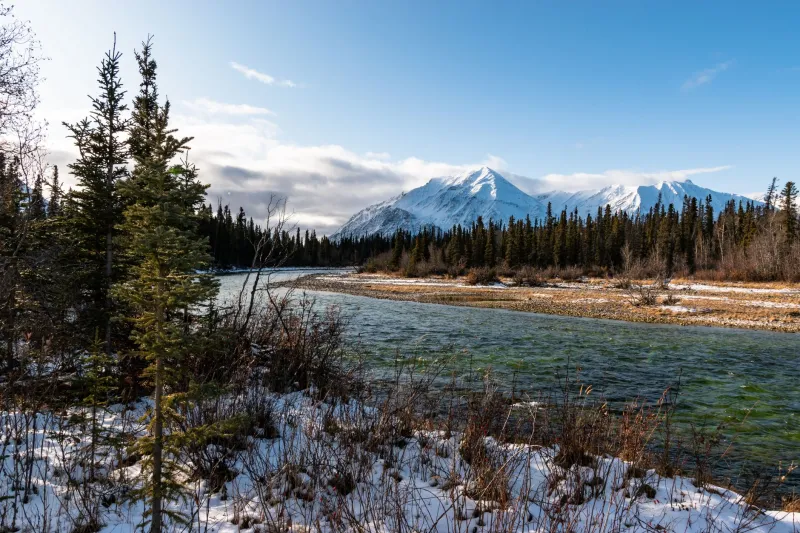
Out on the 1,600-kilometre trail between Whitehorse and Fairbanks — through the Takhini River valley, over King Solomon's Dome, across the Fortymile — the wilderness has a way of humbling even the most sophisticated gear. Batteries fail at -40°C. GPS signals scatter in deep river valleys. Whiteout conditions reduce visibility to arm's length. And in those moments, when the technology goes quiet, mushers increasingly say the same thing: the dog at the front of the line already knows what to do.
What a Lead Dog Actually Knows
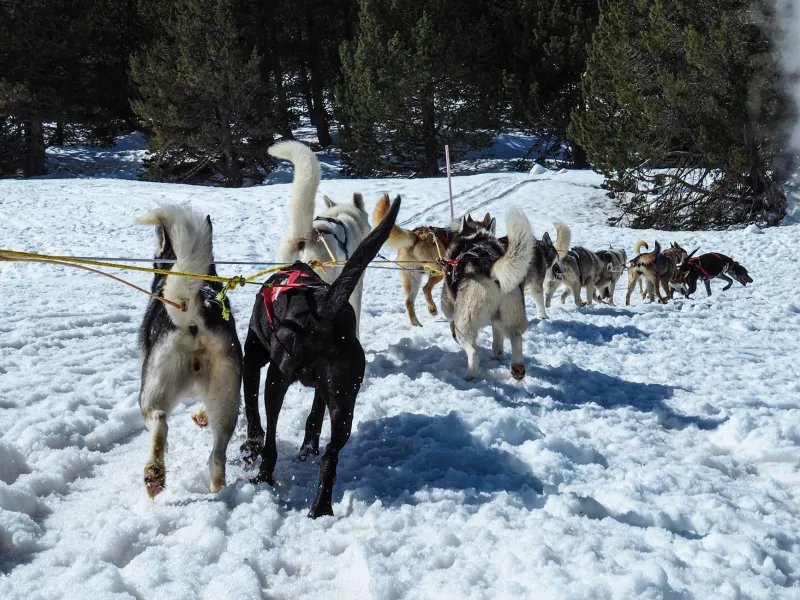
It's tempting to romanticize this — to frame it as some mystical bond between human and animal. But the instincts of a seasoned Quest lead dog are less mystical and more practical than people realize. These animals have been bred and trained over generations to read trail conditions, sense changes in snow density underfoot, detect the subtle air current shifts that signal open water beneath ice, and hold a direction even when visual cues disappear entirely.
A good lead dog doesn't follow the trail. It reads it. That's a distinction that matters enormously when you're navigating a frozen river at 2 a.m. in a ground blizzard and your GPS has just decided to reboot for the third time.
Experienced mushers talk about this with a kind of reverence that has nothing to do with sentimentality. "There have been moments out there where I genuinely had no idea where the trail was," one multi-time Quest competitor has noted in interviews. "And my leaders just... knew. They weren't guessing. They were reading something I couldn't read."
The Limits of Modern Navigation
Here's what the tech optimists don't always account for: extreme cold is catastrophic for electronics in ways that are difficult to fully prepare for. Lithium batteries, which power most modern GPS devices and satellite communicators, lose significant capacity below -20°C and can fail entirely at -40°C. Touchscreens become unresponsive when you're wearing the gloves you need to survive. Condensation from body heat freezes on screens and ports. And in the deep river corridors that make up much of the Quest route, satellite signals are intermittent at best.
None of this is a secret. Quest mushers know it going in and plan accordingly — carrying backup batteries close to their bodies, using older button-operated devices, keeping paper maps as a genuine contingency rather than a novelty. But the point is that the technological safety net has more holes in it than most Canadians, scrolling through weather apps in warm living rooms, would ever assume.
The Quest has always been run in conditions where technology is a supplement, not a solution. That hasn't changed — and the race is arguably defined by that fact.
A Counterculture Event in an Over-Connected Canada
There's something worth sitting with here. In 2024 Canada, the expectation of constant connectivity has seeped into nearly every corner of outdoor recreation. Hikers carry SPOT devices. Backcountry skiers use avalanche airbag packs with digital sensors. Even casual campers often maintain contact with the outside world in ways that would have seemed extraordinary twenty years ago.
The Yukon Quest cuts against that current deliberately. It's not a Luddite stance — race organizers use technology extensively for tracking, safety monitoring, and communications. But the race itself demands that mushers operate in a space where technology is unreliable and where the consequences of failure are not abstract. The wilderness doesn't issue warnings. It just changes.
In that sense, the Quest functions as a kind of cultural corrective. It insists that some environments still require human and animal judgment over algorithmic guidance. It positions itself — perhaps uniquely among major Canadian sporting events — as a test of relationship with the wild rather than management of it.
Ancestral Knowledge and the Trail
It's also worth acknowledging that the instincts of sled dogs didn't emerge from nowhere. They were shaped by thousands of years of partnership with Indigenous peoples across the Arctic and Subarctic — the same peoples whose traditional knowledge of this landscape predates every GPS satellite by millennia. The dogs that run the Quest carry, in a very real sense, a living inheritance from that history.
When a lead dog chooses to veer slightly right of where the trail appears to run, it may be responding to a snow condition that Indigenous ice travelers learned to read generations ago and passed on through their working dogs. That thread of knowledge — embodied, instinctual, non-digital — is part of what makes the Quest more than a race. It's a moving archive.
Trust Is a Skill
For mushers, learning to trust their dogs over their devices is itself a skill that takes years to develop. The instinct to double-check the GPS, to override the dog's chosen line, to impose human logic on an animal that may be perceiving things the human cannot — that instinct is hard to unlearn.
But the mushers who've run the Quest multiple times tend to describe a shift that happens somewhere out on the trail: a moment when they stop second-guessing and start listening. Not passively, not blindly — but with the earned confidence of someone who has learned what their team is capable of.
In that moment, the race becomes something different. Less a contest against the environment and more a collaboration with it.
That's the thing about the Yukon Quest that no app can replicate. Out there, between the mountains and the river ice and the dark, the most sophisticated navigation system on the trail has four legs and a heartbeat.