Inside the Dark Miles: What Really Goes Through a Musher's Mind Across 1,600 Kilometres of Wilderness
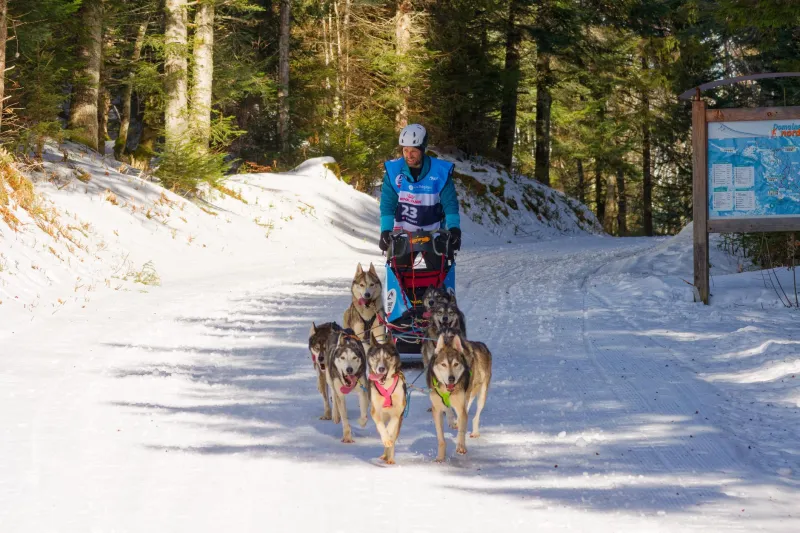
Somewhere past Dawson City, when the trail narrows and the spruce trees press in close on either side, something shifts. The dogs are still running. The sled is still moving. But the musher standing on the runners? They're somewhere else entirely.
That's the part of the Yukon Quest that never makes the highlight reel.
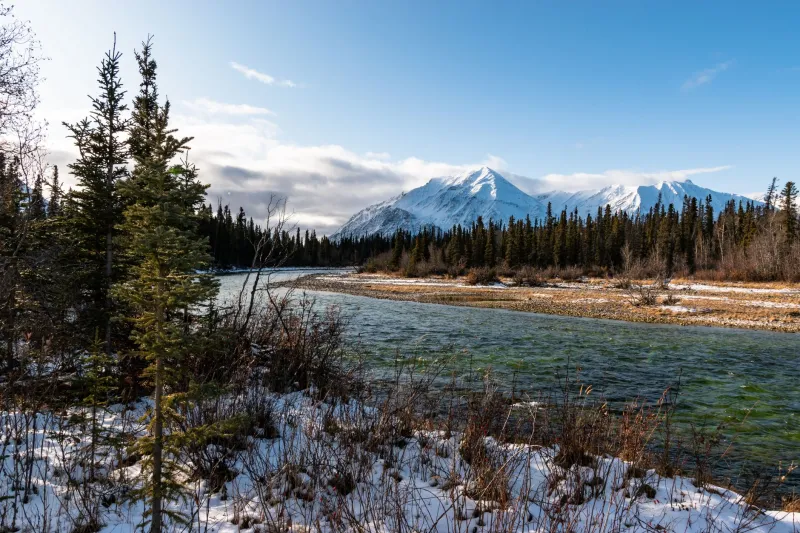
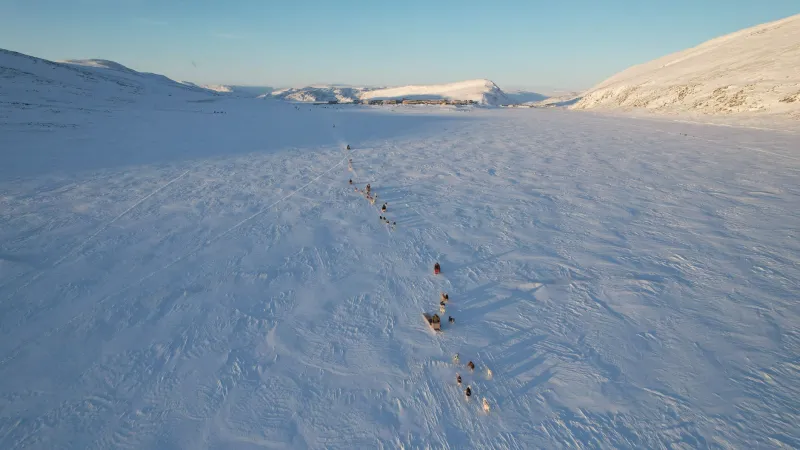
The race covers roughly 1,600 kilometres between Fairbanks, Alaska, and Whitehorse, Yukon — depending on the year's direction — through some of the most unforgiving terrain in North America. Canadians who follow sled dog racing know the numbers: the brutal climbs, the mandatory rests, the checkpoints with their woodstove warmth and lukewarm soup. What gets discussed less often is the interior journey. The one happening entirely inside a musher's head.
We talked to several Yukon Quest veterans — some who've finished on the podium, some who've scratched, and some who've done both — about what those middle miles actually feel like from the inside.
The First Crack Usually Comes Around Day Three
Most mushers describe a honeymoon period at the start of the race. Adrenaline is high, the dogs are fired up, and the crowd energy from the start line carries for a surprising distance. But somewhere around the 72-hour mark, when sleep deprivation starts compounding and the body's reserves begin to thin out, the psychological armour starts showing cracks.
"You stop being able to just not think about things," said one veteran musher who has completed the Quest multiple times. "Normally, you can push stuff aside. Out there, after three days, it all just comes up. Old arguments. People you miss. Decisions you're second-guessing. It's like your brain finally has nothing else to distract itself with."
Several mushers described this period as unexpectedly emotional. Not in a dramatic way — more like a slow leak. Memories surface without invitation. Some mushers say they've found themselves crying on the runners for reasons they couldn't fully explain, only to feel completely fine twenty minutes later.
This isn't weakness. Psychologists who study ultra-endurance athletes note that emotional regulation becomes increasingly difficult as sleep deprivation deepens. The brain's prefrontal cortex — the part responsible for keeping feelings in check — starts to underperform. What's left is something rawer and more honest.
When the Trail Starts Lying to You
Hallucinations are common enough in the Quest that veterans treat them almost matter-of-factly. The sleep-deprived brain, running on cold air and adrenaline, starts generating its own content.
The most frequently reported experiences involve figures on the trail — people standing just off to the side, or shapes that resolve into trees when you get close. Some mushers describe seeing buildings that aren't there, or hearing voices that turn out to be the wind moving through branches. One racer recounted a stretch where they were absolutely convinced someone was running alongside the sled for nearly an hour.
"You learn pretty quick that you can't trust everything you see," another veteran explained. "After your first race, you kind of expect it. You develop this internal fact-checker — like, okay, is that actually a moose or is my brain making things up again? Usually it's my brain."
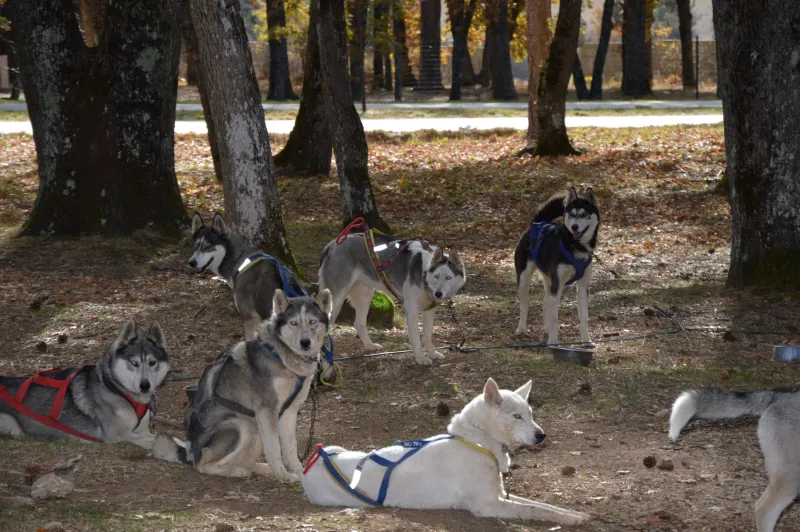
The dogs, interestingly, become a grounding force during these episodes. If the team isn't reacting to something, it's probably not real. Experienced mushers learn to use their dogs as a reality anchor — a practical, four-legged sanity check in the middle of the night.
The Mantras That Keep People Moving
Every musher we spoke to had some version of a mental system — a set of phrases, habits, or rituals that help them push through the worst stretches.
Some are practical: focusing only on the next checkpoint, breaking the trail into sections small enough to feel manageable. Others are more personal. One musher described repeating a specific phrase their late father used to say, something that had felt ordinary at the time but took on new weight in the darkness of the Yukon. Another talked about mentally listing everyone who had helped them get to the start line — sponsors, family, training partners — as a way of feeling less alone.
"There's a version of yourself that shows up around kilometre 900 that you've never met before," one racer put it. "And you have to figure out pretty fast whether that version of you is going to keep going or not."
The answer, for those who finish, is usually built on something specific and personal. A reason that matters enough to override the part of the brain screaming at you to stop.
Checkpoints: Relief, Dread, and Everything Between
Checkpoints are complicated places emotionally. They represent warmth, food, and rest — but they also represent a pause in momentum, and for some mushers, stopping is harder than continuing.
"When you're moving, you're in a rhythm," explained one veteran. "You stop and suddenly you feel everything. Your feet hurt. You're exhausted. And you have to make yourself get back on that sled."
Some mushers describe checkpoint arrivals as the most psychologically fragile moments of the race — not the open trail, but the warmth of the checkpoint building, where the contrast between comfort and what lies ahead becomes starkest. A few have admitted that scratching almost always happens at a checkpoint, never on the trail. The trail keeps you moving. The checkpoint makes you think.
What the Race Leaves Behind
Ask a Yukon Quest finisher what the race changed about them and you'll get a long pause before any answer. It's not a simple question.
Many describe a recalibrated sense of what's actually difficult. Daily frustrations that once felt significant stop registering the same way. There's also, almost universally, a deepened relationship with silence — with the capacity to sit inside discomfort without needing to escape it.
"You spend enough time alone in the dark with your own thoughts and you either make peace with yourself or you don't," one musher said simply. "The Quest has a way of forcing that conversation whether you want it or not."
For Canadian fans watching from the warmth of their homes, that might be the most striking thing about this race — not the distance, not the cold, not even the dogs. It's the fact that out there on the trail, there's nowhere to hide. Not from the weather, not from yourself.
The Quest has a way of stripping everything back to what's essential. And sometimes, in the hardest miles, that turns out to be enough.