Cold Hands, Warm Hearts: The Vets Who Stand Between Sled Dogs and the Yukon's Worst
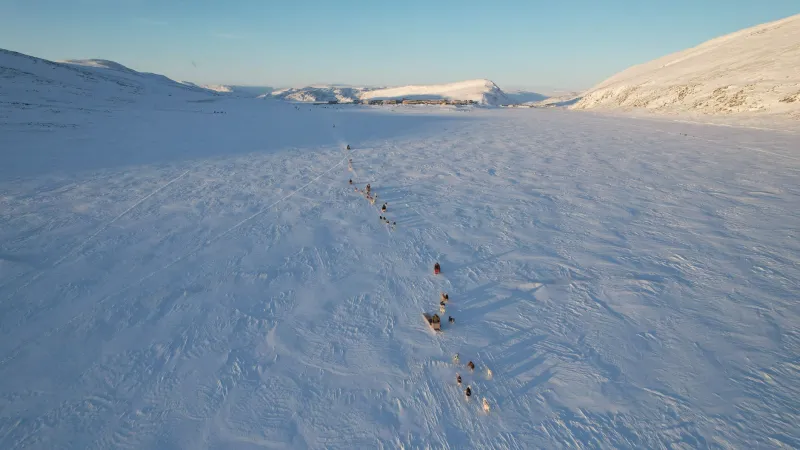
It's somewhere around 3 a.m. at the Dawson City checkpoint. The temperature has dropped well below -30°C. A team pulls in off the trail, dogs panting clouds of breath into the frozen air, and before the musher has even set the snow hook, a headlamp swings over to meet them. It belongs to a veterinarian — likely someone who's been awake for the better part of two days, fuelled by bad coffee and genuine devotion to the animals in front of them.
These are the people most race fans never hear about. No podium. No finish line photo. Just a stethoscope, a clipboard, and an extraordinary sense of duty.
Who Are the Quest Vets, Exactly?
The Yukon Quest relies on a rotating crew of volunteer veterinarians stationed at checkpoints along the roughly 1,600-kilometre route between Whitehorse and Fairbanks (or vice versa, depending on the year). Most of them come from private practice or academic backgrounds — small animal clinics, equine medicine, university research programs. A good number are from right here in Canada, with vets travelling from British Columbia, Alberta, and Ontario to take part.
What they all share is a specific skill set that goes well beyond the typical clinical setting. Working in the backcountry means adapting fast. There's no imaging suite at Braeburn Lodge. There's no heated exam room at Eagle. You've got your hands, your training, your instincts, and whatever fits in a field kit.
Dr. Sarah Knutson, a mixed-animal vet from outside of Whitehorse who has volunteered at multiple Yukon Quest events, describes the experience as unlike anything else in her professional life. "In practice, you have time. You can run bloodwork, consult a colleague, look something up. Out here, you're making calls in real time, sometimes in the dark, sometimes in a blizzard. You learn to trust your gut — but your gut has to be very well trained."
What They're Actually Watching For
Every dog that arrives at a checkpoint gets assessed. Vets are looking at gait, body condition, hydration, paw health, and a whole checklist of physiological markers that can indicate whether an animal is fit to continue. They're watching for early signs of aspiration pneumonia — a serious risk in dogs who run hard in extreme cold — as well as muscle injuries, digestive issues, and the subtler signs of stress that don't always announce themselves loudly.
Sled dogs are athletes, and like any elite athlete, they're good at pushing through discomfort. That's part of what makes this work so demanding. A dog might look fine on the surface while quietly carrying an injury that could become serious if the team heads back out onto the trail. Catching that gap between "looks okay" and "actually okay" is the job.
"These dogs are bred for this," says Dr. Marcus Thibeault, a Canadian vet who has worked multiple ultra-distance races. "They want to run. They'll pull through pain because running is what they do. So you can't just ask them how they're feeling. You have to read them — their posture, their energy, how they're interacting with the other dogs. It's a lot of observation."
When the Call Goes Against a Musher
Here's where things get genuinely hard. When a vet determines that a dog — or an entire team — shouldn't continue, they have the authority to pull that animal from the race. It's a power that exists entirely to protect the dogs, and it's non-negotiable. But that doesn't make it easy.
Mushers spend years preparing for the Yukon Quest. Some have been dreaming about it since they were kids watching the race come through their town. When a vet makes the call that their lead dog needs to be dropped, that musher's race might be effectively over — or at minimum, dramatically altered. Those are emotional moments, and the vets are standing right in the middle of them.
"You have to be compassionate, but you can't second-guess yourself," Knutson explains. "The musher's disappointment is real and it matters, but it can't factor into the medical decision. If the dog needs to stay, the dog stays. Full stop."
Most mushers, she's quick to add, understand this. The culture of the Yukon Quest — and the broader sled dog community in Canada and Alaska — places enormous value on dog welfare. The race's mandatory standards around rest, food, and veterinary compliance exist because the competitors themselves demanded them. Still, in the heat of the moment, at a remote checkpoint in the middle of the night, those conversations can be tense.
The Gear, the Grit, and the Unpredictability
Field veterinary kits for the Yukon Quest are carefully curated — every gram counts when you're operating in remote locations. Essentials include diagnostic tools, wound care supplies, medications for common trail ailments, and warming equipment for hypothermic animals. Vets also coordinate with dropped-dog handlers to ensure animals are transported safely back to Whitehorse or Fairbanks once they've been pulled.
Beyond the medical side, there's a physical endurance component to the job that surprises first-timers. Checkpoint vets don't get to sleep when it's quiet — they're on call for whenever the next team arrives. That might mean a few hours of rest, or it might mean nothing at all. The trail doesn't keep business hours.
"The first time I did it, I thought I was prepared," laughs Thibeault. "I had no idea. By day four I was running on pure adrenaline and the occasional granola bar. But you'd be surprised what you can do when you really care about the outcome."
Why They Keep Coming Back
Ask any of the Quest vets why they volunteer — because that's what most of them are doing, giving up paid time at their clinics to spend weeks in sub-Arctic conditions — and the answers are surprisingly consistent. It's the dogs. It's the community. And it's something harder to name: a sense of purpose that's difficult to replicate anywhere else.
The Yukon Quest is one of the most demanding sled dog races on the planet. The terrain is brutal, the weather is unforgiving, and the margin for error is thin. The veterinarians who show up to staff it are, in their own way, running their own version of the race — not for a trophy, but because someone has to stand at that checkpoint in the dark and make sure the dogs come home safe.
Next time you're watching the tracker update, or following a favourite musher through the overnight checkpoints, spare a thought for the person with the headlamp and the stethoscope. They're out there too, doing the quiet, essential work that makes the whole thing possible.
The dogs run hard because the vets make sure they can.