Fuel or Fail: The Surprising Food Science Keeping Mushers Alive on the Trail
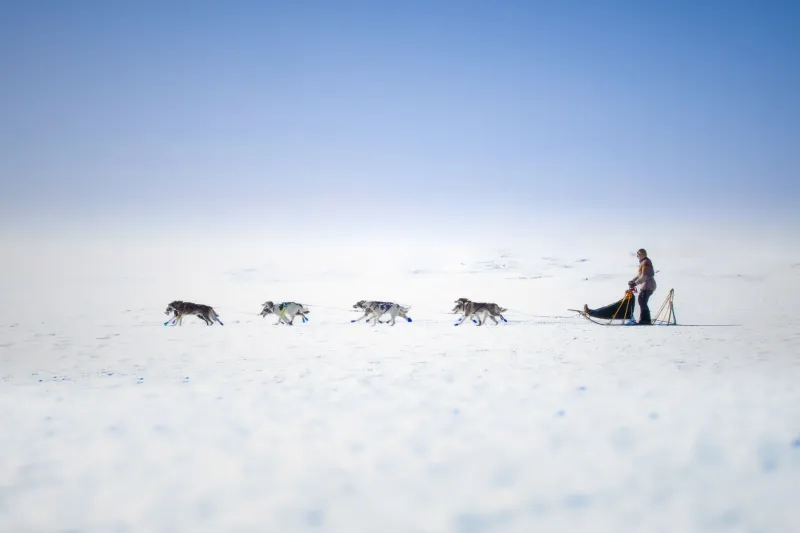
There's a moment somewhere around the Pelly Crossing checkpoint — usually around three in the morning, usually after a stretch of trail that felt longer than it had any right to be — when a musher's body stops asking nicely for food and starts demanding it. Not hunger exactly. Something older than hunger. A deep, cellular insistence that if you don't eat something right now, the machine is going to start eating itself.
For anyone who's never raced the Yukon Quest, that might sound dramatic. For the mushers who've been there, it's just Tuesday.
"People think of checkpoints as rest stops," says veteran musher Carla Thiessen, who has completed the Quest four times and scratched once — a DNF she credits, in part, to underestimating her own caloric needs during the race's brutal second half. "They're not rest stops. They're pit stops. You've got a window to get fuel into your body, deal with your dogs, and get back on the sled. If you waste that window, you pay for it out there."
The Numbers Don't Lie
The math of mushing nutrition is genuinely staggering. In ordinary life, an active adult might burn somewhere between 2,000 and 3,000 calories a day. During the Yukon Quest — a 1,600-kilometre race through some of the most punishing terrain on the planet, in temperatures that can plunge well below minus forty — that number can balloon to anywhere from 5,000 to 8,000 calories per day, depending on conditions, body size, and how hard the trail is pushing back.
And unlike ultramarathon runners, who can set a steady pace and eat on a schedule, mushers are operating at the mercy of their dogs, the weather, and the trail. Sometimes a musher eats a full meal at a checkpoint. Sometimes they're back on the sled after twenty minutes with nothing but a thermos of lukewarm soup and half a chocolate bar.
"You can't really plan it perfectly," says Quest veteran and Whitehorse-based musher Denis Larocque. "You can plan your food drops, you can think about what you want to eat, but the race doesn't care about your meal plan. You adapt."
Food drops are a key piece of the puzzle. Mushers pre-package their own food — along with their dogs' rations — and ship it ahead to checkpoints before the race begins. It's a logistical puzzle that requires thinking about shelf stability, caloric density, ease of preparation, and palatability under extreme fatigue. That last factor is more complicated than it sounds.
When Eating Becomes a Chore
Fatigue does strange things to appetite. After thirty or forty sleepless hours on the trail, the idea of eating can feel genuinely repulsive — even when your body is desperate for fuel. Mushers describe a phenomenon where food that seemed perfectly reasonable when they packed it at home becomes almost impossible to choke down by day three of the race.
"I packed these freeze-dried pasta meals one year," Thiessen recalls, laughing. "Ate them all the time at home. On the trail, after about sixty hours without proper sleep, I opened one up and I thought I was going to be sick. I ended up eating peanut butter straight from the jar and calling it a meal."
This is why experienced mushers tend to gravitate toward a few key nutritional principles. First: caloric density over volume. There's no room — physically or psychologically — for bulky meals that don't pack a serious energy punch. Foods high in fat and protein tend to win out. Bacon, cheese, nuts, butter-heavy soups, and jerky are perennial checkpoint favourites. Second: familiarity and comfort. The brain under stress craves the known. Mushers who try adventurous new foods during a race often regret it. Third: warmth. A hot meal isn't just comforting — it actively helps the body maintain core temperature, which in Arctic conditions is a genuine survival consideration.
"Warm food is medicine out there," says Larocque. "A bowl of moose stew at Braeburn at two in the morning — that's not just calories. That's your whole nervous system relaxing."
The Psychology of the Checkpoint Meal
Beyond the physiology, there's a psychological dimension to checkpoint eating that mushers talk about with surprising candour. Checkpoints are social spaces — the only places on the trail where mushers interact with other humans, with race officials, with volunteers who've often been awake just as long as the competitors. Sharing a meal, even a brief one, serves a function that goes beyond nutrition.
"You sit down with another musher and you eat something hot and you remember that you're a human being," Thiessen says. "That sounds weird, but out there, you kind of forget. You're in this zone where it's just you and your dogs and the trail. The checkpoint snaps you back."
The psychological reset of a proper checkpoint meal — even fifteen minutes sitting down with real food and a cup of tea — has been shown in adventure sports research to meaningfully improve cognitive performance and decision-making in the hours that follow. For mushers making critical calls about dog health, trail conditions, and pacing strategy, that mental clarity can be the difference between a smart race and a dangerous one.
What Actually Works
So what do the veterans actually eat? The answers are eclectic and deeply personal. Larocque swears by homemade bannock with peanut butter and honey, supplemented by commercial energy bars and whatever hot soup the checkpoint volunteers have on offer. Thiessen has refined her food drops to a combination of high-fat cheese, smoked salmon, dark chocolate, and instant mashed potatoes loaded with butter and cream powder.
Both mushers emphasize hydration as equally critical — and equally easy to neglect. In cold, dry Arctic air, dehydration can sneak up fast, and thirst isn't always a reliable signal. Mushers who make a point of drinking consistently at every checkpoint, rather than waiting until they feel thirsty, tend to perform better in the race's later stages.
"It's not glamorous," Larocque admits. "None of it is. You're eating peanut butter with a spoon at three in the morning in a warming hut in the middle of nowhere. But if you get it right, your body carries you. And if you get it wrong, the trail wins."
Out here, the trail is always looking for a reason to win. The mushers who finish strong are the ones who don't give it one.