Caught by the Quest: How Watching from the Sidelines Turned These Canadians Into Mushers
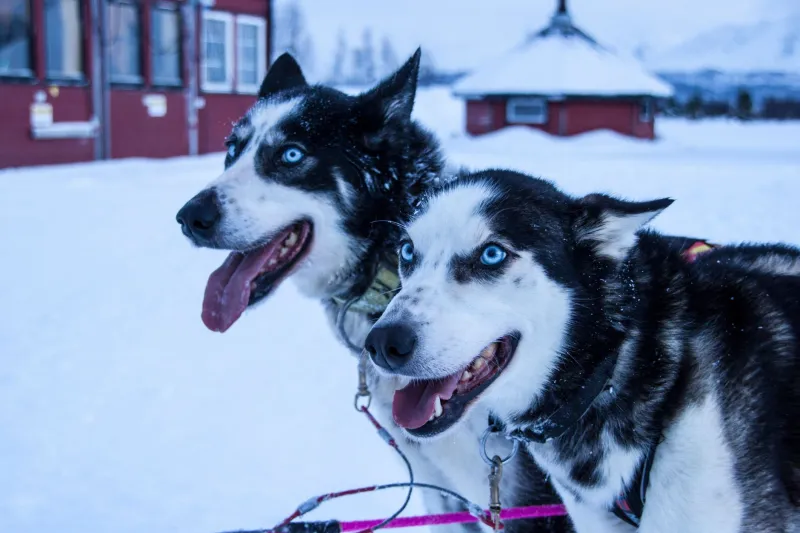
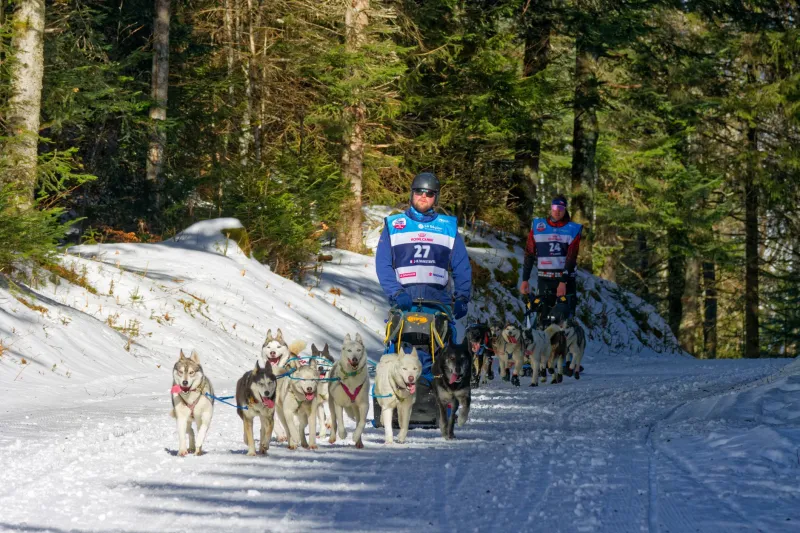
Marianne Thibodeau didn't go to Whitehorse looking for a new life. She went because her sister was volunteering at the Braeburn checkpoint and had an extra couch. That was six years ago. Today, Marianne runs a small kennel outside of Haines Junction and is deep into her second season of serious training with a goal that would have seemed absurd to her former self: finishing the Yukon Quest.
"I watched the first team come through and I just started crying," she says, laughing a little at the memory. "I didn't even know why. I'd never had anything to do with dogs or sledding. But something about it — the dogs, the silence, the way the musher looked — I couldn't shake it."
She's not alone. Across Canada, the Quest has a quiet reputation for doing exactly this: pulling people in from the edges of the event and not letting them go.
The Spectator Pipeline
The Yukon Quest draws a loyal and growing crowd of spectators, particularly at accessible checkpoints like Braeburn Lodge, Carmacks, and Dawson City. For many Canadians, especially those in the Yukon and northern B.C., the race is a fixture of winter life — something you load the kids into the truck for, a reason to stand outside in minus-30 and feel genuinely alive.
But spectating the Quest isn't a passive experience. The race has a way of demanding something from you. You end up talking to mushers' handlers, learning which dogs are the leaders and which ones run better in cold versus warm conditions. You start tracking race standings at 2 a.m. You volunteer for a checkpoint and suddenly you're hauling straw bales and learning how to check a dog's hydration levels from a race veterinarian.
And then, for some people, the question shifts from "how does this work?" to "could I do this?"
From Volunteer to Competitor
Darren Kasprowicz grew up in Edmonton and had zero exposure to dog sledding before he took a solo road trip up the Alaska Highway on a whim in his late twenties. He stumbled into Whitehorse during Quest week, ended up volunteering at the finish line for three days, and went home with a completely different sense of what he wanted to do with his spare time.
"I started small. I took a recreational mushing course the following winter. Then I got one dog, then three, then eight," he says. "It escalates. Anyone who tells you it doesn't is lying to you."
Darren is now five years into the sport and running mid-distance races in the Northwest Territories and northern Alberta. He's not at Quest level yet — and he's the first to say so — but he's building toward it with the kind of methodical patience the sport requires.
That pathway — spectator to volunteer to recreational musher to competitive racer — is one the Quest community knows well. Race organizers and veteran mushers talk openly about the event's role as a pipeline, a place where the next generation of competitors discovers the sport for the first time.
What the Community Offers
One thing that makes the Quest's community unusual is how accessible veteran mushers tend to be. Unlike some elite endurance sports where top competitors exist in a separate stratosphere from newcomers, dog sledding in Canada has a culture of knowledge-sharing that can genuinely accelerate a beginner's development.
"I reached out to a musher I'd watched finish the Quest and just asked if I could come visit the kennel," Marianne recalls. "She said yes. I spent a weekend there learning how she manages her dogs' conditioning through the off-season. That kind of generosity — you don't find that everywhere."
First Nations communities across the Yukon have also played a meaningful role in preserving and transmitting the knowledge that underlies traditional dog sledding. For newcomers approaching the sport with genuine respect and curiosity, those connections can offer a depth of understanding that goes well beyond technique.
Mushing clubs in Whitehorse, Watson Lake, and across northern B.C. run beginner programs that have become de facto feeder systems for the Quest. Some clubs have seen membership numbers climb noticeably in the years following a particularly high-profile Quest finish or a moment of national media coverage.
The Reality Check
Nobody who's been honest with a newcomer lets them skip the hard part of the conversation. Getting to the Quest starting line takes years. It takes a kennel of well-trained dogs, which means either breeding or purchasing animals and investing heavily in their care. It takes financial resources that aren't trivial — gear, food, veterinary costs, race entry fees, and travel add up fast. And it takes the kind of time commitment that reshapes your entire life around the dogs' schedule.
"The dogs don't care if it's Christmas," Darren says. "They need to run. You build your life around that or you don't do it. Simple as that."
Marianne puts it differently. "People ask me if I regret getting into this and I always say — I regret nothing about the dogs. The sore muscles, the debt, the cold mornings — yeah, those are hard. But the dogs? Never."
Growing the Starting Line
For the Quest as an institution, the spectator-to-musher pipeline matters. The race has always depended on a steady flow of new competitors willing to take on one of the most demanding endurance events in the world. Each year's field carries a mix of veterans and newcomers, and those first-timers often bring energy and perspective that enrich the event.
More broadly, the growth of recreational and competitive mushing across Canada — driven in part by the Quest's visibility — keeps the sport alive in communities where it has deep historical roots and introduces it to regions where it's entirely new.
For Marianne, sitting in her truck outside her kennel with a coffee going cold in her hand while she watches her dogs roll in the snow, the starting line in Whitehorse feels both very far away and entirely inevitable.
"I'll get there," she says. "The dogs will get me there."