Echoes on the Trail: The Forgotten Settlements Haunting the Yukon Quest Route
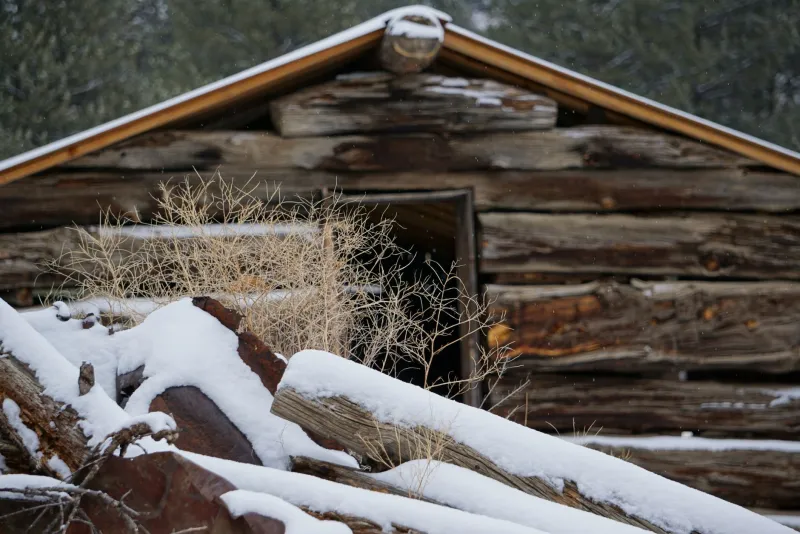
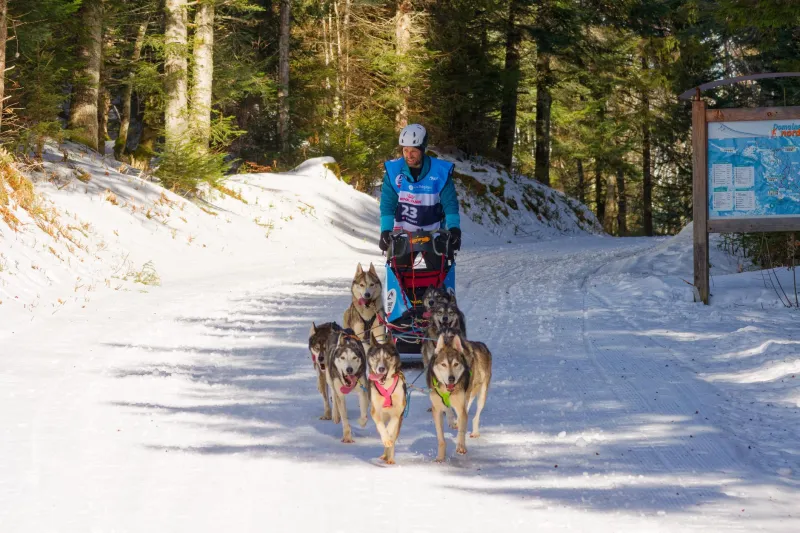
Somewhere east of Dawson City, in the hours before dawn when the cold is at its most absolute and the only sound is the rhythm of dog paws on packed snow, a musher might glance to the side of the trail and see something that stops the breath: the collapsed ribcage of a log cabin, half-swallowed by spruce, its roof long since surrendered to the weight of decades. A rusted stovepipe. A doorframe standing alone like a question mark in the dark.
The Yukon Quest trail is many things — a test of endurance, a feat of logistics, a love letter to the North. But it is also, quietly and persistently, a corridor through time. The route passes through or near dozens of former settlements, mining camps, and trading posts that once housed thousands of people and now house only memory. To race the Quest is to move through a landscape layered with human story, most of it unspoken, some of it nearly forgotten.
Gold, Ice, and Ambition
To understand the ghost towns of the Quest route, you have to understand what the Klondike Gold Rush actually looked like on the ground. Beginning in 1896, the discovery of gold in the Klondike sent tens of thousands of prospectors flooding into the Yukon Territory and interior Alaska — through passes, across frozen rivers, along routes that would later become the bones of the Quest trail. Settlements exploded into existence almost overnight: supply depots, roadhouses, mining camps, telegraph relay stations. At their peak, some of these communities rivalled small cities.
By the 1910s and 1920s, most were already emptying out. The gold was harder to reach, the easy claims were gone, and the brutal reality of Yukon winters wore down everyone who wasn't built for permanence. People left. Buildings stayed — for a while.
What remains today, along the Quest corridor, is a scattered archaeology of ambition. Some sites are formally recognized heritage locations. Others are simply there, unmarked and largely unknown to anyone who isn't paying close attention to the landscape they're moving through.
Stepping Through the Ruins
One of the most evocative stretches of the race for historically minded mushers is the section between Dawson City and the Yukon-Alaska border. This corridor was once lined with roadhouses — essentially the service stations of the dog-team era — spaced roughly a day's travel apart to accommodate freighters and mail carriers. Many of these roadhouses were still operating when the first Yukon Quest was run in 1984. Some were already ruins.
"You pass through these places and there's this weight to them," says longtime Quest competitor and Yukon resident Marie-Ève Bouchard, who grew up hearing stories about the trail from her grandfather, a trapper who worked the country in the 1950s. "You know people lived there. You know they had whole lives there. And now it's just snow and old wood and silence."
Bouchard has made a practice of researching the historical sites along the route before each race, partly out of genuine curiosity and partly because she finds it helps her relationship with the trail. "When you know the stories behind a place, it changes how you move through it. You're not just passing through wilderness. You're passing through someone's home."
Indigenous Presence and the Deeper Timeline
The gold rush settlements are the most visible layer of history along the Quest route, but they're far from the oldest. The trail passes through the traditional territories of multiple First Nations, including the Tr'ondëk Hwëch'in, the Selkirk First Nation, and the White River First Nation, among others. For thousands of years before European contact, these lands were traversed by Indigenous peoples along trade and travel routes that predate the Quest by millennia.
Some of those ancient routes are, in fact, the same routes the Quest follows today. The geography of the land — the river valleys, the mountain passes, the frozen waterways — dictated movement long before any race organizer drew a line on a map.
Tr'ondëk Hwëch'in cultural liaison and historian Joseph Alexie has spoken publicly about the importance of recognizing this layered history. "The Quest runs through our homeland," he noted in a 2019 community forum in Dawson City. "These aren't just scenic locations. They're places where our ancestors fished, hunted, raised families. That history doesn't disappear because a race goes through."
For many Indigenous communities along the route, the Quest has become an opportunity to share that history with a wider audience — through checkpoint programming, cultural displays, and the simple act of welcoming competitors into communities that have been inhabited, in various forms, for far longer than Canada has existed as a country.
The Roadhouse at Stepping Stone
Among the most haunting waypoints on the Alaskan side of the route is the area around the old Stepping Stone roadhouse, a relay point that operated during the peak of the gold rush era and served the mail teams that ran between Whitehorse and Fairbanks. The building itself is long gone, but the clearing where it stood is still visible, and old-timers in the area can point to where the dog yard used to be, where travellers would have bedded down in temperatures not unlike what Quest mushers face today.
"There's something almost eerie about it," says Fairbanks-based musher and Quest finisher Tom Kessler. "You're doing something that looks a lot like what those mail carriers did — dogs, sled, cold, dark. And you're in the same place they were. It collapses time somehow."
That collapse of time is, perhaps, one of the Quest's most underappreciated qualities. The race doesn't just test what competitors are made of. It asks them to reckon with what the land is made of — all those layers of human presence, human effort, and human absence that have accumulated over centuries in one of the most demanding environments on Earth.
The ghost towns don't speak. But they listen. And out there in the dark, moving fast and cold and alive, mushers learn to listen back.