Hot Soup at Minus Forty: The Checkpoint Cooks Who Keep the Quest Alive
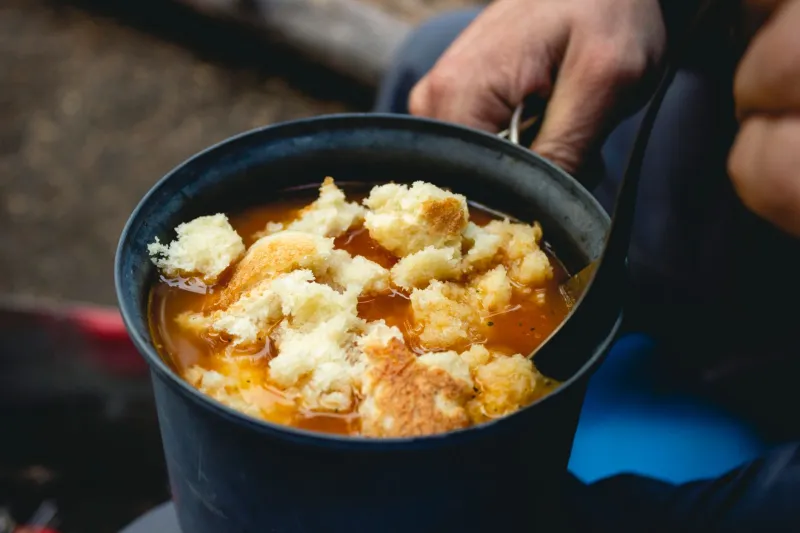
It's 3:17 in the morning at a remote checkpoint somewhere between Whitehorse and Fairbanks. The temperature outside has dropped to -42°C. A musher stumbles through the door, face half-frozen beneath a balaclava, moving on somewhere between instinct and stubbornness. Before they can even unzip their parka, a bowl of moose stew lands on the table in front of them. Steam curls up toward the raftered ceiling. Someone pours a mug of coffee without being asked.
This is what survival looks like from the inside.
The checkpoint kitchen doesn't get a lot of spotlight. The mushers get the profiles, the dogs get the close-up photos, and the trail gets the dramatic weather coverage. But quietly, in draughty community halls and repurposed trapper cabins stretched across one of the most remote race routes on the planet, a small army of volunteer cooks has been feeding exhausted human beings for decades. They work long shifts, sleep in shifts, and somehow manage to produce warm, nourishing food for dozens of people using equipment that would make most restaurant chefs sweat.
The Logistics of Feeding People at the Edge of the World
Running a checkpoint kitchen is a logistical puzzle that starts weeks before the race does. Supplies have to be trucked, flown, or snowmobiled in, depending on the checkpoint's location. Propane tanks. Industrial-sized pots. Cases of canned goods. Dry goods sealed against moisture. Perishables timed to arrive just before the race does, because there's no running to the corner store when you're an hour by snowmobile from the nearest road.
Linda Thorvaldsen has been cooking at a mid-race checkpoint in the Yukon for eleven years. She started as a general volunteer and ended up in the kitchen almost by accident. "Someone handed me a ladle on my second day and I just never gave it back," she laughs. Her operation during race week runs around the clock in rotating four-hour shifts, keeping hot food available whenever a musher rolls in — which could be any hour at all.
"You can't predict the race," she says. "You might get three teams in at 2 AM and then nobody for six hours. So you keep the soup on low and you stay ready."
The menu is built around practicality and caloric density. Mushers burning through extreme cold and physical exhaustion can need upwards of 6,000 to 8,000 calories a day. Checkpoint food has to deliver warmth, energy, and comfort fast — because most racers are only stopping long enough to rest their dogs before pushing back out onto the trail.
What's Actually on the Menu
Forget anything fussy. Checkpoint cooking is honest, hearty northern food — the kind of stuff that sticks to your ribs and gets you back on your feet.
Moose stew is a perennial favourite at Yukon checkpoints, often donated by local hunters from the season before. It's slow-cooked with root vegetables, thickened with flour, and seasoned simply. Alongside it, you'll typically find a rotating cast of chili, beef barley soup, bannock (the Indigenous quick bread that has fed people across this part of the country for centuries), scrambled eggs at all hours, and mountains of toast slathered in butter.
Breakfast foods are particularly popular regardless of the time, because mushers' internal clocks are completely scrambled after days on the trail. "I've served eggs and bacon at 1 AM more times than I can count," says Thorvaldsen. "And I've served chili at 8 in the morning to someone who looked at me like it was the best thing they'd ever seen."
Sweet things matter too. Brownies, cookies, and cinnamon buns appear regularly — not just as morale boosters, but as legitimate quick energy. Fat and sugar are not the enemy out here. They are the fuel.
The Human Side of the Kitchen
What makes checkpoint cooking genuinely remarkable isn't the recipes. It's the reading of the room.
A musher who arrives mid-race is rarely in a talkative mood. They're running on fragments of sleep, managing a team of dogs they are deeply responsible for, and calculating distances and weather and trail conditions in the back of their minds even while they eat. A good checkpoint cook learns to read that state quickly — to offer food without fanfare, to keep the space warm and quiet, to refill the mug without making a production of it.
"Some of them just need to sit for a minute without anyone talking to them," says Marc Bélanger, who volunteers at a checkpoint in the Fortymile region and has been doing it for seven years. "You learn to tell. You put the food down, you step back, and you let them be."
Others arrive craving connection — wanting to talk through what they've just experienced, to share something about a dog who's been performing brilliantly, or to process a tough stretch of trail out loud. The kitchen becomes a brief sanctuary, a few minutes of human warmth before the wilderness swallows them again.
Bélanger keeps a running mental log of each racer's preferences from checkpoint to checkpoint when information gets passed along. "If someone mentioned they don't eat red meat, I try to have something ready for them. It's a small thing. But when you're that tired, small things feel enormous."
Why They Do It
Nobody volunteers for a checkpoint kitchen because it's glamorous. The hours are brutal, the conditions are challenging, and the recognition is minimal compared to what the mushers and their dogs receive. So why come back year after year?
For Thorvaldsen, it's the moment a musher looks up from a bowl of stew and says, quietly, "This is exactly what I needed." That's it. That's the whole thing.
"The race is this massive, almost mythological thing," she says. "And we're just in this little warm room feeding people. But without that little warm room, the whole thing falls apart."
She's not wrong. The Yukon Quest is often described in terms of the trail — the brutal cold, the impossible distances, the singular willpower it takes to push through. But the trail is threaded together by human beings at rest stops, in kitchens, ladling soup at 3 AM because someone out there needs it.
The checkpoint kitchen doesn't make headlines. But it makes the race possible. And out here, where the trail meets the wild, that's more than enough.