From Dead Last to Podium Glory: The Yukon Quest Comebacks That Rewrote the Record Books
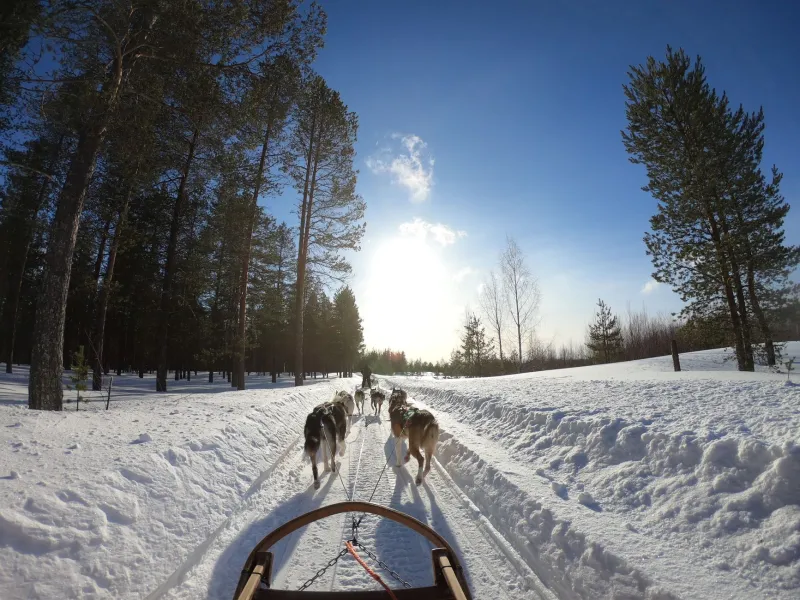
There's a saying that gets passed around in the mushing community like a worn-out trail map: the Yukon Quest doesn't really begin until something goes wrong. A dropped dog. A missed turn in a whiteout. A sled that decides to throw a runner somewhere between Dawson City and the back of beyond. The race — all 1,600 kilometres of it — is basically a thousand ways for everything to fall apart.
But here's the thing about the Quest that keeps people glued to the tracker: it's also a race where falling apart doesn't mean falling out. Some of the most jaw-dropping moments in the event's history haven't happened at the front of the pack. They've happened when someone clawed their way back from what looked like a race-ending hole and somehow found their way onto the podium.
These are those stories.
When the Trail Buries You Alive
Ask any veteran musher what it feels like to watch the field pull away from you and they'll give you some version of the same answer: it's quiet. Eerily, devastatingly quiet. The sound of other teams fading into the distance, the cold settling in a little heavier, the mental math starting to turn ugly.
For mushers who've been through it, that moment is a fork in the road that has nothing to do with the actual trail. One path leads to a slow, demoralising grind toward an early scratch. The other — the harder one — leads to a recalibration. A deep breath. A decision to race the trail instead of the competition.
"You stop thinking about who's ahead of you," one veteran Quest finisher explained during a conversation at a Whitehorse training camp a few seasons back. "The second you start chasing other teams, you start making decisions for the wrong reasons. The comeback only works if you go back to basics — your dogs, your pace, your plan."
That mental shift, from competition mode to survival-and-efficiency mode, is the secret engine behind nearly every great Quest reversal on record.
The Tactical Reset
Comeback runs in the Yukon Quest rarely look like dramatic sprints. They look like patience. Mushers who've pulled off the race's most stunning reversals tend to share a common thread: somewhere in the middle miles, they made a tactical decision that seemed counterintuitive at the time.
Some chose to rest their teams longer than anyone else at a checkpoint, absorbing short-term position losses to bank long-term energy. Others made quiet route adjustments — reading trail conditions that their competitors had either ignored or misjudged. A few made the call to drop a struggling dog earlier than they'd planned, lightening the load on the team and allowing the remaining dogs to find a rhythm they hadn't been able to sustain.
None of these decisions look heroic in the moment. They look like concessions. But the Quest has a way of rewarding the long game in ways that shorter races simply don't. Over 1,600 kilometres, a well-rested team in hour seventy can absolutely swallow a gassed-out team that was leading at hour forty.
"The trail evens things out," as one Yukon-based musher put it. "You just have to be willing to trust that and not panic."
Reading the Dogs, Not the Leaderboard
The comebacks that stick in the memory of Quest followers aren't just about mushers digging deep — they're about the dogs. Every dramatic reversal in this race has been built on a team that found something extra when it mattered most.
Mushers who've experienced both sides of a comeback run talk about a particular moment when the team seems to collectively decide they're not done. The gait tightens up. The ears come forward. There's an energy shift that's hard to describe but impossible to miss if you've spent enough time on the back of a sled.
That's when the musher's job changes. It stops being about managing a struggling team and starts being about getting out of the way of a team that's found its stride. Knowing the difference — knowing when to push and when to just hold on — is one of the most underrated skills in the sport.
Veterans who've made comebacks talk about trusting that feeling, even when the tracker says they're still well back of the leaders. Because in the Quest, the tracker is always a delayed and incomplete picture. The only real-time data that matters is right there in front of you, pulling hard into the dark.
The Psychology of the Hole
Falling behind in the Yukon Quest isn't just a logistical problem. It's a psychological one. The isolation of the trail means there's no coach to call, no teammate to lean on, no crowd to lift you. It's just you, your dogs, and whatever mental furniture you've brought along for the ride.
Mushers who've staged comebacks consistently describe a moment of acceptance — not giving up, but genuinely letting go of the outcome and focusing entirely on the process. It sounds almost zen, and in a way it is. The Quest has a funny way of stripping away everything that isn't essential.
"At some point you just decide you're going to run the best race you can with what you've got," one experienced racer reflected. "And sometimes that ends up being good enough. Sometimes it's better than good enough."
The psychological resilience required to stay in the game when you're hours behind — when the easy, rational decision would be to scratch and save your dogs for next year — is genuinely extraordinary. It's the kind of thing that doesn't show up in the official results, but Quest fans who've followed the race for years know it when they see it.
Why These Stories Matter
The Yukon Quest is, at its core, a Canadian story. It's a story about endurance, about wilderness, about the particular kind of stubborn optimism that it takes to point a dog team at a thousand miles of subarctic trail and say, yeah, let's do this.
The comebacks are the purest expression of that spirit. They're proof that the race isn't over until it's over — a cliché that becomes something real and vivid when you're watching a musher reel in a fifteen-hour deficit over the final stretch into Fairbanks or Whitehorse.
These aren't just sports stories. They're stories about what happens when someone decides that the trail hasn't beaten them yet, and they're going to make it prove otherwise.
And on the Yukon Quest, that decision — made somewhere in the frozen dark, with tired dogs and cold hands and a long way still to go — is where legends actually get made.