Where the Trail Turns Mean: Inside the Yukon Quest's Most Feared Stretch of Ice
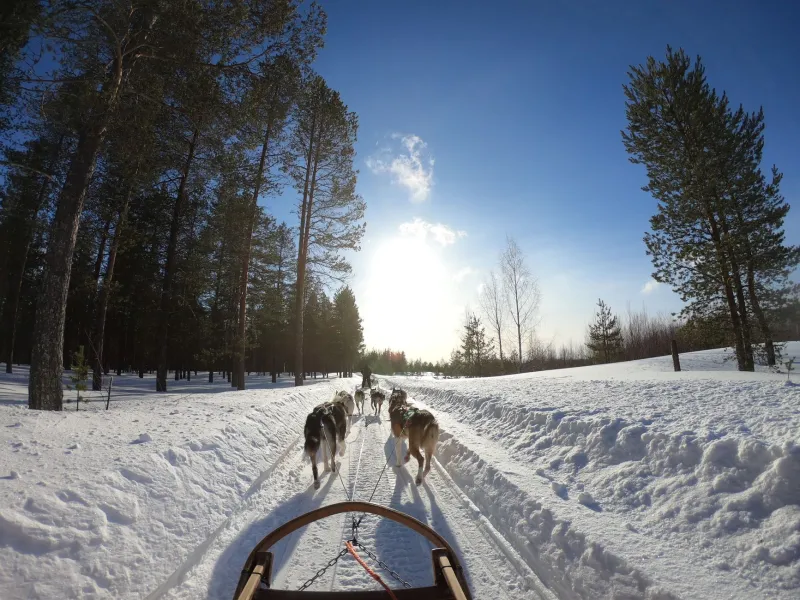
There's a section of the Yukon Quest trail that veteran mushers talk about the way sailors talk about a bad reef — quietly, and with respect. It has swallowed sleds whole, sent dogs limping to the nearest checkpoint, and forced grown adults who race through -50°C nights without flinching to genuinely question their choices. This is the story of that stretch, and why no amount of modern technology has managed to take the fear out of it.
A Trail With Memory
The Yukon Quest covers roughly 1,600 kilometres between Whitehorse, Yukon and Fairbanks, Alaska. Most of it is brutal in the honest, expected way — long climbs, overflow ice, wind that cuts through the best gear money can buy. But there are a handful of places along the route where the trail stops being merely difficult and becomes something closer to adversarial.
One such stretch runs through a narrow river corridor that old-timers in the region have never quite trusted. It doesn't appear on any official danger list. There's no sign warning mushers to slow down. But ask anyone who has raced the Quest more than once, and they'll know exactly which section you mean before you finish the sentence.
Locally, some call it the Ghost Route — not an official designation, but a name that's stuck among the racing community for reasons that feel obvious once you've heard the stories. The terrain shifts fast here. What looks like solid trail in daylight can become a patchwork of overflow and soft snow by nightfall. River ice that held firm for a week can fracture without warning after a temperature swing. And the topography funnels wind in ways that create near-zero visibility in conditions that don't technically qualify as a storm.
What the GPS Won't Tell You
Modern mushers carry more navigational technology than their predecessors could have imagined. GPS units, satellite communicators, lightweight weather apps pulling real-time data — it's a far cry from the paper maps and gut instinct that guided early Quest competitors through the same country.
But technology has its limits, and the Ghost Route is where those limits show up most clearly.
"The GPS will tell you where the trail is supposed to be," said one veteran musher who has completed the Quest five times and requested to keep his name out of it — a telling detail in itself. "It won't tell you that the trail moved three metres to the left because the ice shifted, or that the overflow under that snow is knee-deep. That's the stuff that gets you."
Overflow — the layer of liquid water that forms on top of river ice when pressure from above forces water up through cracks — is the section's most persistent hazard. It's often invisible beneath a thin crust of snow. A team can be moving at full pace, and within a few strides the dogs are breaking through into water that soaks their paws and flash-freezes on contact with the air. In extreme cold, wet booties and saturated fur become a medical emergency inside of minutes.
Several mushers over the years have scratched from the race entirely after encounters with overflow in this corridor. Others have spent hours stopped on the trail, drying out gear and assessing dogs, burning through precious race time and body heat in equal measure.
The Knowledge That Doesn't Fit in a Database
What's kept experienced mushers alive and competitive through this section isn't their tech — it's the oral knowledge passed down through the racing community and, critically, from the First Nations and First Peoples whose families have travelled this country for generations.
Elders from communities near the trail have long understood where the ice is unreliable and why. The river's hydrology, the way certain weather patterns interact with the terrain, the subtle visual cues that signal danger underfoot — this knowledge exists in stories and conversations, not in any app or guidebook.
Some of the most seasoned Quest competitors make a point of talking to local knowledge-keepers before the race, asking specific questions about conditions that season. It's a habit that sits outside the official pre-race preparation process, but it's one that gets passed along between mushers who take the trail seriously.
"There's a particular bend where the current runs faster than it looks," explained a Yukon-based musher who has mentored several younger competitors. "Someone from one of the communities near there told me about it years ago. I've watched people who didn't know about it have real trouble at that exact spot. The river doesn't care how good your gear is."
Narrow Escapes and Hard Lessons
The race archives are full of incidents tied to this section of trail, though they're scattered across years and race reports in ways that make the pattern easy to miss if you're not looking for it.
Sleds have gone through ice here. Dogs have been pulled from overflow. At least one musher has spent an unplanned night on the trail after losing the route entirely in a whiteout that developed faster than any forecast suggested it would. These aren't stories of recklessness — they involve experienced, well-prepared competitors who simply ran into conditions that outpaced their ability to adapt in real time.
What the incidents share is a common thread: the section punishes assumptions. Mushers who treat it like any other river crossing, who don't slow down and read the surface before committing, are the ones who end up in trouble. The ones who come through cleanly tend to be those who've either been warned, been through it before, or have the kind of quiet instinct that comes from thousands of hours on northern trails.
Why Fear Is Actually the Point
There's a case to be made that the Ghost Route's reputation serves a useful function. The Yukon Quest has always positioned itself as the tougher, more demanding alternative to other long-distance sled dog races — a race where wilderness skills matter as much as athletic conditioning, where the trail itself is a competitor.
A section that demands genuine respect, that can't be powered through on fitness and equipment alone, is in some ways exactly what the race is supposed to be about. It filters for the kind of decision-making and situational awareness that define great mushers. It rewards the people who've done their homework, who've listened to the right voices, who slow down when slowing down is the harder choice.
That doesn't make it any less dangerous. But it does make it meaningful in a way that fits the spirit of the race.
For now, the Ghost Route remains what it's always been — a stretch of trail that asks more of you than most, that keeps its secrets close, and that has a way of reminding even the most experienced competitors that out here, the wilderness sets the terms. You just try to keep up.