Follow the Money: The Year-Round Economic Engine Quietly Powering the Yukon Quest
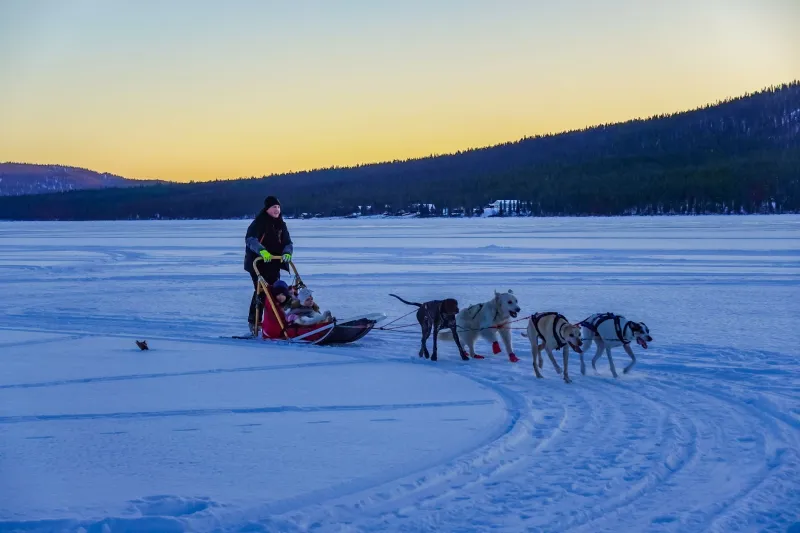
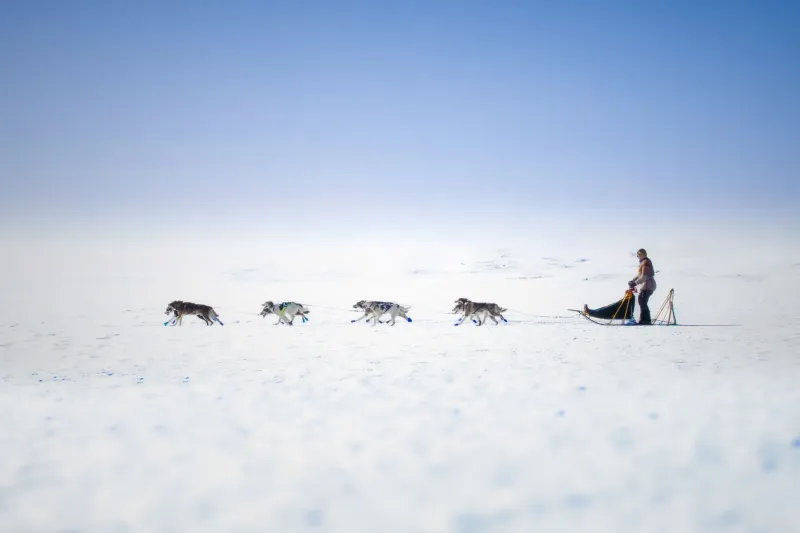
Most people think the Yukon Quest happens in February. And sure, that's when the sleds leave the start line in Whitehorse or Fairbanks, when the crowds gather in the cold, and when the drama unfolds across frozen rivers and mountain passes. But ask any musher, any gear supplier, or any small-town business owner along the trail corridor, and they'll tell you the same thing: the Quest never really stops.
The economic activity generated by this race doesn't compress neatly into a single week on the calendar. It spreads across twelve months, reaching into communities that rarely make the national news — and it moves a lot more money than most Canadians would guess.
More Than a Race Week Bump
Local spending during race week is easy to see. Hotels fill up. Restaurants run out of food. Gas stations do brisk business. But the deeper story is what happens the other fifty-one weeks of the year, when mushers are quietly building toward their next attempt at the Quest.
A competitive musher running a team of fourteen dogs doesn't flip a switch in January. The preparation is constant, expensive, and geographically distributed across a wide network of suppliers, trainers, and service providers — many of them Canadian.
Conservative estimates from industry observers suggest that a serious Quest competitor spends anywhere from $30,000 to over $100,000 annually on race preparation, depending on the size of their kennel and how far they're travelling for training. Multiply that across dozens of registered mushers and the numbers start to add up fast.
The Dog Food Supply Chain Nobody Talks About
If there's one sector quietly thriving on the back of the Yukon Quest, it's the specialized dog food industry. Racing sled dogs aren't eating grocery store kibble. They're consuming high-fat, high-protein diets formulated specifically for endurance athletics — and they're eating a staggering amount of it.
A single dog on a Quest team can burn upward of 10,000 calories a day during the race itself. In training, the numbers are lower but still significant. Feed that across a fourteen-dog team, every day, for twelve months, and you're looking at a serious volume of product.
Several Canadian companies — including manufacturers based in Alberta and British Columbia — have quietly built substantial portions of their business around the mushing community. Some have developed specific product lines targeting Quest-level competitors, with formulations designed for extreme cold and sustained exertion. These aren't niche side projects anymore. For some manufacturers, the mushing market represents a meaningful and growing revenue stream.
Dropship arrangements, bulk purchasing agreements, and checkpoint food drops all create logistical work that flows through freight companies, warehousing operations, and rural transport providers — many of them operating out of small northern communities.
Gear Makers and the Art of Building for the Cold
The equipment world around the Yukon Quest is similarly layered. Sleds, harnesses, booties, sleeping systems, cookware, navigation tools — every item a musher carries has to perform in conditions that would destroy ordinary consumer gear. That creates a steady market for Canadian craftspeople and manufacturers who specialize in cold-weather performance equipment.
Sled builders in the Yukon and elsewhere have developed reputations that extend well beyond the racing community. A well-regarded sled can take months to build, cost several thousand dollars, and involve materials sourced from multiple provinces. Some builders maintain waitlists because demand — driven in large part by Quest competitors and aspirants — consistently outpaces their production capacity.
Harness makers, bootie manufacturers, and outerwear companies tell similar stories. The Quest functions as something like a proving ground. If your gear survives 1,000 miles of Arctic wilderness, it's a marketing credential that money can't easily buy. Many businesses have leaned into that, using Quest participation as a core part of their brand identity.
Training Facilities and the Kennel Economy
Preparing a competitive Quest team requires access to trails, space, and often, professional coaching or mentorship. That's generated a quiet but real market for training facilities and established kennels that offer guided programs for up-and-coming mushers.
In communities across the Yukon and northern British Columbia, kennels have expanded their operations to accommodate paying guests — recreational mushers, tourists, and serious competitors looking to train on terrain similar to the Quest trail. This agritourism-adjacent model has become a meaningful income stream for kennel operators who might otherwise struggle to make the economics of competitive mushing work.
Veterinary services are another piece of the puzzle. The dogs come first in this sport — that's not just a slogan — and the level of veterinary care required to keep a competitive team healthy is substantial. Canine sports medicine, nutritional consulting, and preventive care have all grown as specialties, with practitioners in Whitehorse and other northern hubs building practices that serve the mushing community directly.
Small Towns Along the Trail
The communities that dot the Quest route — places like Carmacks, Pelly Crossing, and Dawson City in the Yukon — experience a concentrated economic jolt during race week, but the relationship runs deeper than that. Many of these communities have developed year-round connections to the mushing world.
Local residents work as volunteers, yes, but they also provide accommodation for mushers doing pre-race trail reconnaissance, supply firewood and provisions to training expeditions, and in some cases operate small businesses that exist almost entirely because of the infrastructure the Quest has built around the trail.
In Dawson City, for example, the race has become woven into the community's broader identity as a destination. Visitors who come for the Quest often return in other seasons, drawn by an image of the North that the race has helped shape and sustain.
The Ripple Nobody Counted
What's striking, when you start pulling on these threads, is how little of this economic activity has ever been formally measured. Race week spending gets some attention. The broader supply chain? Almost none.
There's no comprehensive study tracking the full economic footprint of the Yukon Quest across Canada — not yet, anyway. What exists are fragments: anecdotal accounts from business owners, rough estimates from industry insiders, and the occasional survey that captures a slice of the picture without adding up the whole.
That gap is worth noting, because it almost certainly means the race's economic contribution is being underestimated — possibly significantly.
For a country that talks a lot about supporting northern and remote communities, the Yukon Quest represents something genuinely interesting: a private sporting event that generates real, distributed economic activity in places that often feel left behind by the broader Canadian economy. The trail connects more than Whitehorse and Fairbanks. It connects a web of suppliers, craftspeople, small businesses, and community economies that depend, more than most people realize, on a race that runs through the dark heart of the Canadian North every February.
The dogs keep running. And so, quietly, does the money.