Racing on Borrowed Ice: How a Warming North Is Changing Everything About the Yukon Quest
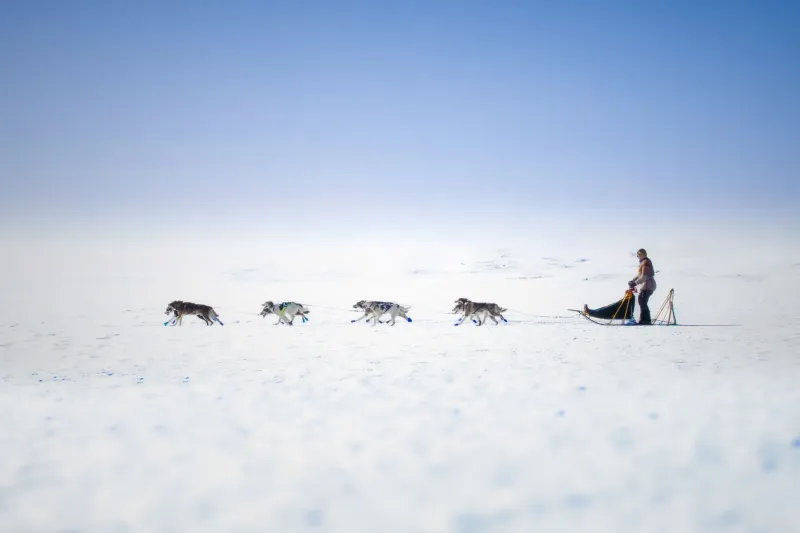
There's a section of the Yukon River that veteran musher Dale Chorley knows by feel as much as by sight. He's crossed it a dozen times in competition, read its surface in moonlight, felt the flex of ice beneath his runners at 3 a.m. when the temperature sits at minus forty. He can tell you which bends collect overflow and which stretches tend to freeze clean. Or rather, he could tell you — because that knowledge, earned over decades, is becoming less reliable with every passing year.
"The river doesn't do what it used to do," Chorley says, not dramatically, just matter-of-factly. "You used to have a sense of it. Now you're guessing more than you're reading."
That erosion of certainty is one of the quieter crises facing the Yukon Quest — a race built entirely on the premise that the northern wilderness is a known, if punishing, quantity. As the climate shifts beneath the feet of mushers and the paws of their dogs, the 1,000-mile trail between Whitehorse and Fairbanks is becoming something harder to predict, harder to manage, and in some stretches, harder to justify running at all.
The Trail Is the Same. The Conditions Aren't.
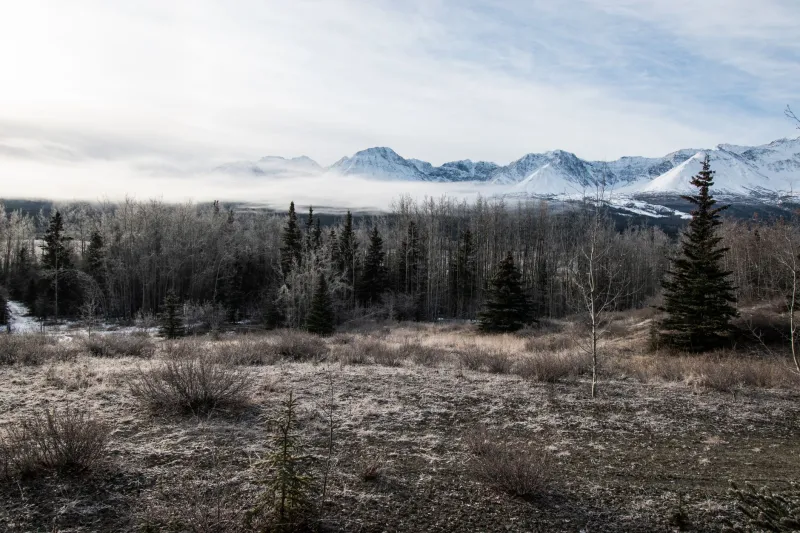
The Yukon Quest route hasn't changed in any dramatic way since the race was founded in 1984. It still crosses the same mountain passes, follows the same frozen rivers, winds through the same remote communities that have served as checkpoints for four decades. But ask anyone who's been around long enough — race veterans, trail breakers, checkpoint volunteers in places like Pelly Crossing or Eagle — and they'll tell you the course feels fundamentally different than it did even fifteen years ago.
Winter in the Yukon and Alaska now arrives later and leaves earlier. Average temperatures across the region have increased by roughly two degrees Celsius over the past fifty years, with some interior areas warming even faster. That might not sound like much, but in a race where ice thickness is the difference between a safe crossing and a catastrophic one, two degrees is enormous.
Race officials have quietly expanded their pre-race ice assessment protocols over the past several years. Trail crews now conduct more extensive scouting on river sections that were once considered reliably solid by mid-January. In some years, overflow — water that seeps up through cracks in river ice — has created conditions that force last-minute route adjustments, sometimes just days before the race begins.
"We've had to become more adaptive," says one longtime trail committee member who asked not to be named. "There are sections we used to mark in our sleep. Now we're out there with augers doing thickness checks we never needed to do before."
What the Scientists Are Seeing
Dr. Meaghan Russel, a permafrost and northern hydrology researcher based at the University of Alberta, has been studying freeze-thaw cycles in the Yukon basin for over a decade. Her work doesn't focus on sled dog racing, but her findings are directly relevant to anyone trying to move across frozen landscapes in winter.
"The ice season is compressing," she explains. "Rivers are freezing later in autumn and breaking up earlier in spring. In some years, the window of safe, stable river ice is measurably shorter than it was in the 1980s and 1990s. And the variability has increased — you get years that seem almost normal, then years that are dramatically off. That unpredictability is actually harder to manage than a consistent shift would be."
She points to another factor that rarely gets discussed: snow depth and snow character. Historically, cold temperatures in the northern interior produced dry, light snow — the kind that compacts well into a firm trail surface. Warmer temperatures bring wetter, heavier snow, or in some cases, mid-winter rain events that create an icy crust that's brutal on dogs' paws and nearly impossible for sleds to navigate efficiently.
"The mushers are dealing with surface conditions that are more variable, more unpredictable, and in some cases more physically damaging to their teams," Russel says. "That's a real and growing challenge."
Veterans Speak Plainly
If you want to understand what's changed, spend time with the people who've run this race across multiple decades. They don't tend toward hyperbole — northern athletes rarely do — but they're noticing things that concern them.
Three-time Quest finisher Annika Sorenson, who now runs a kennel in the Yukon Territory and mentors younger mushers, describes a shift in how she prepares her dogs for the race. "When I started, you trained for cold. Real cold, sustained cold. Now I'm training for variability. We might hit minus forty-five on Eagle Summit and then, two days later, be dealing with slush on the river. The dogs have to be ready for everything, and that's a different kind of conditioning."
Sorenson also notes changes in vegetation along parts of the trail. Shrubs that were once frozen solid and manageable are now sometimes flexible and grabby mid-race. Areas of the trail that cut through black spruce forest are showing signs of what scientists call "drunken forest" — trees tilting at odd angles as the permafrost beneath them destabilises. It's not just an aesthetic change. It's a trail management problem.
"You're breaking trail through sections that used to be straightforward," she says. "Trees are down in places they didn't used to be. The landscape is moving."
Rethinking the Race Itself
None of this means the Yukon Quest is going anywhere. The race has survived financial crises, organisational upheaval, and a global pandemic. It's resilient in the way that northern communities tend to be — pragmatic, adaptive, quietly tough. But the climate question is prompting real conversations at the organisational level about what the race might need to look like in twenty or thirty years.
Some of those conversations involve technology: better real-time ice monitoring, more sophisticated weather forecasting tools integrated into race management, GPS trail data that can flag anomalies faster. Others are more fundamental — discussions about whether certain river crossings should be reconsidered as permanent fixtures, or whether the race calendar might eventually need to shift to accommodate a shorter reliable winter window.
There's also a cultural dimension that's harder to quantify. The Yukon Quest has always drawn its identity from the idea that it's the toughest, most authentic long-distance sled dog race in the world — a direct link to the traditions of northern travel and Indigenous trail knowledge that shaped this region. That identity is bound up in the land, in the cold, in the specific character of a Yukon winter. As that winter changes, the race's relationship to its own heritage becomes more complicated.
"The trail is a living thing," says Chorley. "It changes every year, always has. But there's a difference between the normal kind of change and what we're seeing now. One feels like the land breathing. The other feels like something shifting underneath you that you can't quite get your footing on."
For now, the Quest runs on — adapting where it must, holding to tradition where it can, and trusting in the same qualities that have always defined it: endurance, resourcefulness, and a hard-won respect for a landscape that has never made anything easy. The ice may be less predictable than it once was. But the spirit that sends athletes and their dogs out onto it, year after year, hasn't changed at all.