Keepers of the Cold: The Volunteers Who Hold the Yukon Quest Together from the Inside Out
There's a moment that longtime checkpoint manager Diane Firth describes as the best part of her winter. It's not the finish line, not the awards banquet, not even the first dog team rolling into her station after days on trail. It's the two or three hours before any of that — when the woodstove is roaring, the soup is on, and the cabin smells like spruce smoke and strong coffee.
"You're just waiting," she says, laughing softly. "And somehow that waiting feels like the whole point."
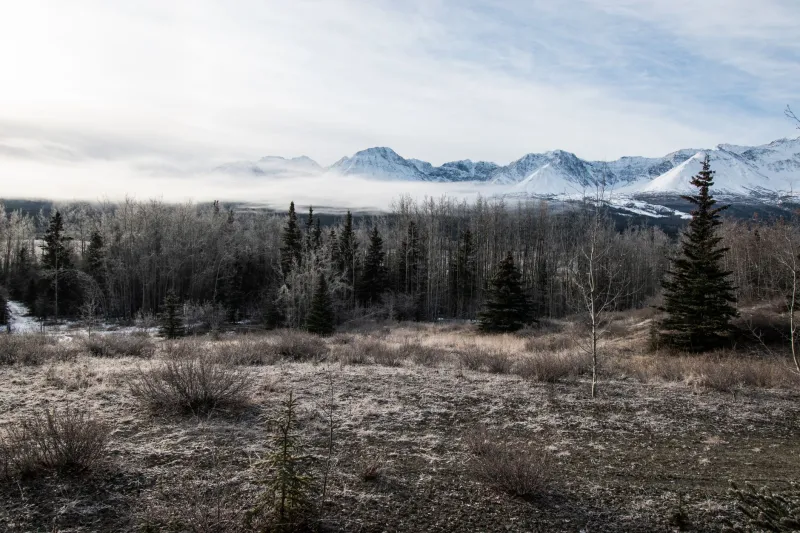
Firth has managed the Stepping Stone checkpoint for going on eleven years. It's a place most race fans couldn't point to on a map, a cluster of hand-built structures perched along a frozen river bend roughly halfway through nowhere. Yet every February, it becomes one of the most important addresses in Canadian sport.
More Than a Pit Stop
The Yukon Quest's checkpoints are easy to overlook in the broader narrative of the race. Coverage tends to follow the leaders, track the drama at mandatory rest stops in places like Dawson City, or zoom in on the emotional finish in Fairbanks or Whitehorse. The in-between points — the remote cabins, the community halls, the old trapper's outposts — rarely get their due.
But spend any time talking to mushers who've actually run the Quest, and the checkpoints come up fast. Not as scenery, but as lifelines.
"There have been moments where I rolled into a checkpoint genuinely not knowing if I could keep going," says veteran musher and four-time finisher André Tremblay, originally from Québec's Laurentian region before relocating to the Yukon a decade ago. "And the people there — volunteers who've been up all night in minus forty — they just quietly fix everything. They help you sort your dogs, they hand you food, they don't make a big deal of it. It's incredible."
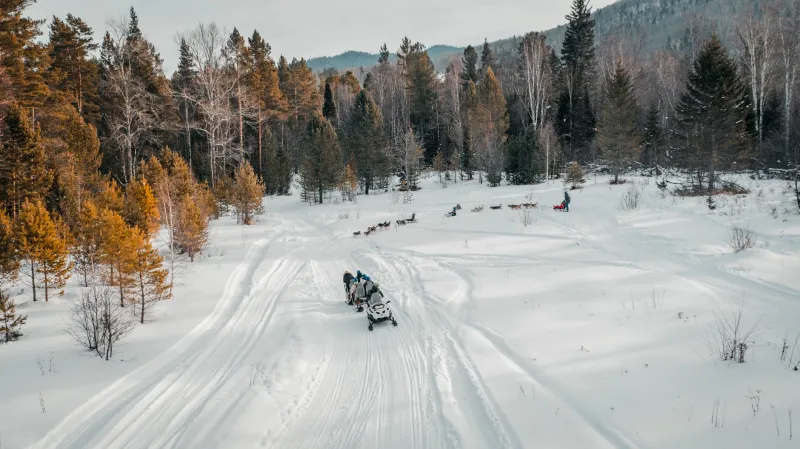
That low-key competence is something checkpoint veterans wear like a badge. The logistics required to staff and supply these remote outposts are genuinely staggering. In some cases, supplies are flown in by bush plane days before the race begins. In others, snowmobile convoys haul fuel, food, and medical equipment over trails that would challenge even experienced backcountry travellers.
The Anatomy of a Remote Checkpoint
Not all checkpoints are created equal. Some are anchored by established community infrastructure — a school gymnasium in a First Nations village, a roadhouse with a generator and running water. Others are bare-bones affairs: a wall tent, a cache of firewood, and a satellite phone that may or may not connect on the first try.
What they share is a standard set of requirements laid out by race officials. Every checkpoint must have veterinary support, a communications link to race headquarters, and the capacity to shelter mushers and dogs in an emergency. Beyond that, the character of each station is largely shaped by whoever's running it.
At some checkpoints, that means elaborate hot meal spreads — moose stew, bannock, pots of chili that have been simmering since before dawn. At others, it's more spartan, but no less warm in spirit. Mushers have described pulling into remote stations to find hand-lettered welcome signs, local kids peering in through frosted windows, and volunteers who've memorized every competitor's name and dog roster.
"These people know my team better than some of my neighbours back home," says Tremblay. "They've been studying the race for weeks before it even starts."
Living Repositories of Race History
One of the stranger and more wonderful things about spending time at Yukon Quest checkpoints is the history that accumulates in them. Firth's station at Stepping Stone, for example, has gradually become something between a functional way station and an informal archive of the race's four-decade story.
One wall holds a collection of bib numbers donated by mushers over the years. A shelf near the radio holds a binder of handwritten notes from previous race seasons — weather observations, dog health records, the occasional personal message left by a musher for the next person through. A framed photograph shows a finish from the early 1990s, the image slightly faded but the expressions on the faces absolutely not.
"People leave things," Firth says. "Sometimes on purpose, sometimes by accident. Either way, it adds up."
This kind of organic preservation matters. The Yukon Quest doesn't have a formal museum, and the sport's institutional memory lives in scattered places — in the minds of old-timers, in photo albums, in exactly these kinds of checkpoint cabins. When a checkpoint manager retires after twenty years of service, a piece of that memory goes with them unless someone thinks to capture it first.
There's growing conversation within the Quest community about how to better document this layer of the race's heritage, particularly as the sport draws interest from younger Canadians and international audiences who came to sled dog racing through social media rather than lived experience in the North.
The People Behind the Warmth
Who volunteers for this, exactly? The answer is more varied than you might expect.
Some checkpoint managers are lifelong Yukoners for whom the Quest is simply part of the February rhythm — as expected as freeze-up in October or breakup in May. Others are transplants who discovered the race after moving north for work and found themselves drawn into its orbit. A surprising number are former athletes, people who ran the race years ago and found that they couldn't quite leave it behind even after hanging up their bibs.
What they share, almost universally, is a particular kind of patience. Checkpoint work involves long stretches of preparation and waiting, punctuated by intense bursts of activity when a team arrives. The hours are brutal. The pay is nonexistent. The accommodation is, to put it charitably, rustic.
"I tell people it's the best bad idea I've ever committed to," laughs Gordon Paulsen, who has volunteered at a remote interior checkpoint for eight consecutive years. "Every spring I say I'm done. Every fall I'm back making lists."
His lists, it turns out, are legendary among the Quest volunteer community — meticulous spreadsheets tracking supply inventories, weather patterns, and historical team arrival times that he uses to predict when the first musher might roll in. It's the kind of obsessive preparation that the race quietly depends on.
The Trail Runs Through People
The Yukon Quest's brand identity — where the trail meets the wild — tends to conjure images of dog teams disappearing into spruce forests, of northern lights overhead and silence below. And those images are real. But the trail also runs through people. Through cabins lit from within. Through volunteers who have given up their February, year after year, to make sure that when a musher arrives exhausted and cold and uncertain, there's someone there who already knows their name.
That's not a small thing. On a race this remote, in conditions this unforgiving, it might be the whole thing.
Next time you're following the Quest's tracker and watching a dot inch toward a checkpoint in the small hours of the morning, spare a thought for whoever's on the other end of that dot. They've been awake for a while. The soup is hot. And they wouldn't be anywhere else.