Trailblazers Before the Race: The Indigenous Knowledge That Built the Yukon Quest
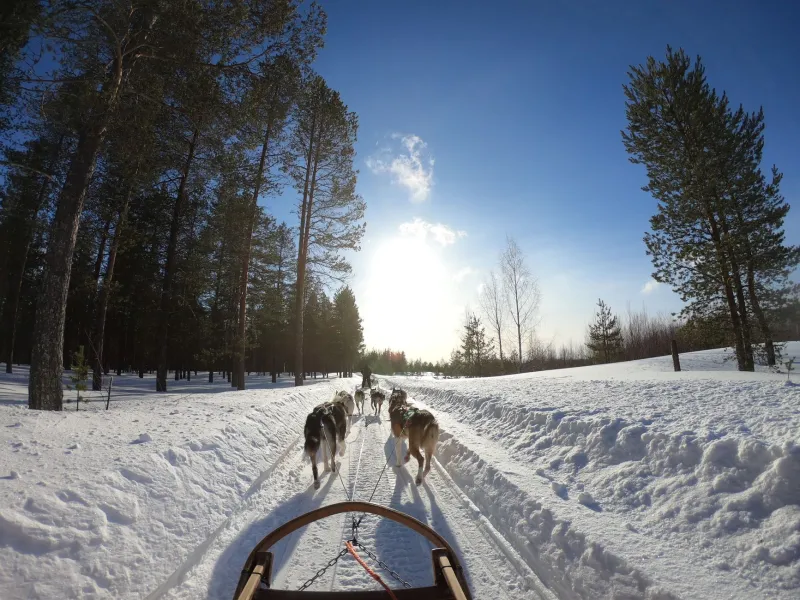
There's a moment, somewhere between Dawson City and Carmacks, when the trail stops feeling like a race course and starts feeling like something older. The spruce trees lean in close, the river ice groans beneath the runners, and the silence is the kind that has weight to it. Mushers talk about this stretch like it has a personality. In a way, it does — and it was shaped long before any race organiser drew a map.
The Yukon Quest, which winds through some of the most remote and demanding terrain in North America, didn't emerge from a blank canvas. Its 1,600-kilometre route follows corridors that First Nations and Indigenous Alaskan peoples have navigated for thousands of years: trading routes, hunting paths, winter travel corridors that connected communities across the boreal wilderness. Understanding that history isn't just cultural courtesy. For many mushers, it's practical survival knowledge.
Paths Worn by Generations
The Han Hwëch'in, the Tr'ondëk Hwëch'in, the White River First Nation, the Tanana Chiefs — these communities and others didn't just live adjacent to the land the Quest crosses. They mapped it through lived experience, passing down intimate knowledge of safe river crossings, shelter locations, and seasonal conditions that no modern GPS device can fully replicate.
Elders from the Tr'ondëk Hwëch'in in Dawson City have long spoken about the trails their ancestors used to travel between the Yukon River and the tributaries feeding into it. These weren't casual walks. They were carefully understood systems of movement, calibrated to the rhythms of freeze-up and break-up, to the behaviour of ice at specific bends in the river, and to the microclimates that could mean the difference between a safe passage and a dangerous one.
When the Quest's founders — including a group of mushers and community organisers in 1984 — sat down to design a route that honoured the spirit of the old Yukon mail and supply trails, they were, whether they fully realised it at the time or not, drawing on a map that Indigenous peoples had already written.
Reading the Land, Not Just the Trail
Any experienced Quest musher will tell you that the trail markers only get you so far. What happens between the markers — when weather rolls in, when the packed snow drifts over, when you're navigating by starlight at minus forty — is where traditional ecological knowledge quietly steps in.
Indigenous mushers who have competed in the Quest speak about this with a kind of grounded confidence that's hard to fake. The ability to read the land — to notice the way a ridgeline channels wind, to recognise which creek beds are likely to overflow even when the surface looks solid, to understand what a particular cloud formation means for the next twelve hours — isn't something you learn from a race briefing. It's something that gets passed down around kitchen tables and on training runs with elders who've spent their whole lives paying attention.
For many Indigenous competitors, racing the Quest isn't just athletic achievement. It's a form of reconnection. The trail passes through homelands, through places that carry family names and community stories. Checkpoints like Pelly Crossing, home to the Selkirk First Nation, aren't just rest stops — they're living communities whose relationship with this land predates the race by centuries.
Community as Infrastructure
One of the less-discussed aspects of the Yukon Quest's success is how much it depends on the goodwill and active participation of Indigenous communities along the route. Checkpoint hospitality, local trail knowledge shared informally with race officials, and the simple fact that mushers are travelling through sovereign First Nations territories — these are relationships that require ongoing respect and reciprocity.
In recent years, the Quest has made more deliberate efforts to formalise those relationships, consulting with First Nations governments about trail conditions, cultural protocols, and community involvement. It's a work in progress, and Indigenous leaders are candid about the fact that there's more ground to cover. But the conversation is happening, and that matters.
Elders who have watched the race pass through their communities for decades describe a complicated mix of pride and protectiveness. Pride, because the race draws attention to landscapes and corridors that their ancestors knew better than anyone. Protectiveness, because that knowledge carries responsibility — and because the land itself is changing in ways that demand the kind of careful attention that traditional knowledge systems were built for.
Markers Older Than the Race
Trail markers in the Quest are a practical necessity — the coloured flags that guide mushers through whiteout conditions and unmarked terrain. But the concept of marking a path through the wilderness isn't a modern invention. Indigenous travellers used natural landmarks, blazed trees, stone cairns, and detailed oral descriptions to communicate route information across generations.
Some of the natural features that mushers use as reference points today — a particular bend in the Yukon River, a recognisable ridge above a valley — were noted and named by Indigenous communities long before any race volunteer hammered a stake into the snow. The names themselves carry navigational data. In many Indigenous languages, place names describe physical characteristics, seasonal conditions, or historical events that happened there. Knowing the name, in the original language, sometimes tells you something useful about what to expect.
A Living Legacy on the Trail
What makes this history more than just a historical footnote is that it's still active. Indigenous mushers continue to compete in the Quest, bringing with them a relationship to the trail that is qualitatively different from that of competitors who encounter it fresh. Youth mushing programmes in First Nations communities across the Yukon are producing the next generation of competitors — young people for whom the Quest trail is, in a very real sense, home ground.
Organisations like the Yukon First Nations Culture and Tourism Association have worked to ensure that the cultural significance of these routes doesn't get flattened into mere race logistics. The trail is a heritage corridor as much as it is a competition venue, and treating it as such enriches the experience for everyone who travels it.
For mushers from outside these communities — and that's most of the field — the invitation isn't to appropriate or perform Indigenous knowledge, but to approach the trail with the kind of humility that comes from knowing you're a guest on someone else's home ground. The land has been read and understood and cared for by people who knew it long before any race existed. That's not a burden on the modern competitor. It's a gift, if they're willing to receive it.
The Quest is a race, yes. But it's also a journey through a living archive — one written in snow and spruce and river ice by people whose relationship with this wilderness runs deeper than any finish line.