Read the Dog, Not the Screen: How Mushers Are Rediscovering the Art of Trusting Their Teams
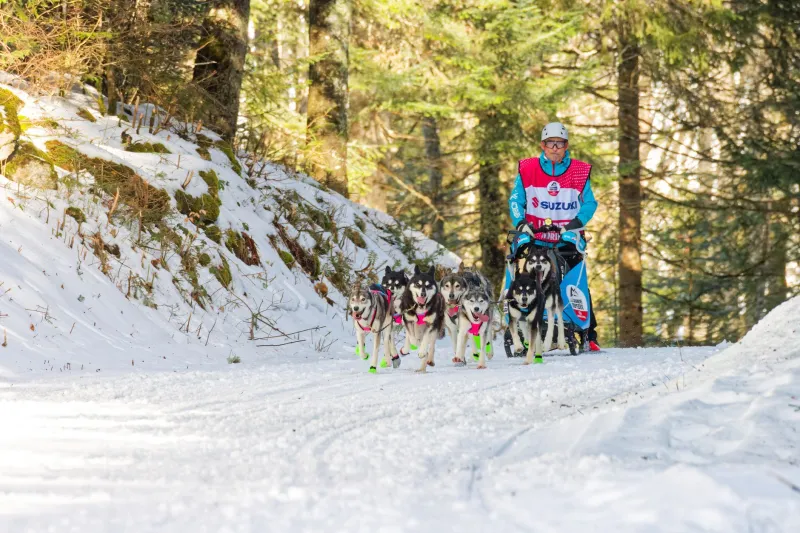
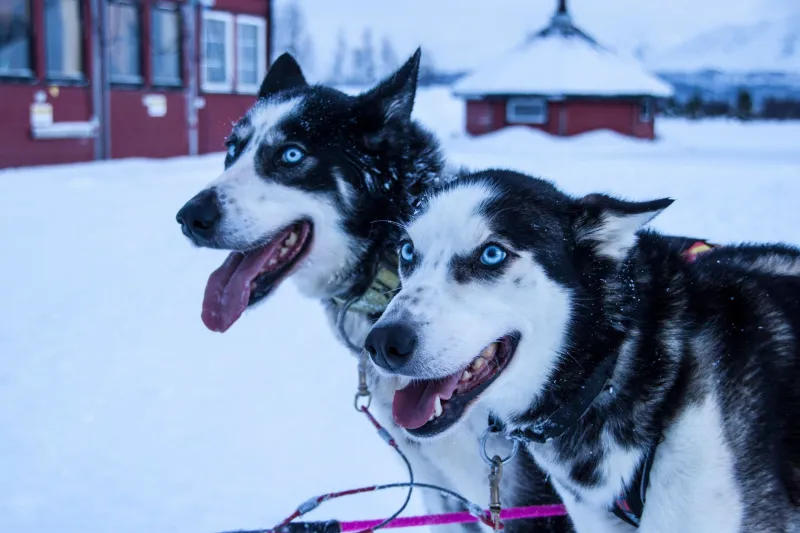
Saskia Vanleer remembers the exact moment she stopped trusting her GPS and started trusting her lead dog instead.
It was her third Yukon Quest, somewhere in the dead stretch between two checkpoints, visibility near zero from blowing snow, temperature sitting at a point where your brain starts to slow down whether you want it to or not. Her device was telling her to go one way. Koda — a seven-year-old male she'd raised from a pup on her kennel outside of Whitehorse — was pulling toward another.
"I stood there for probably ninety seconds," she says. "Which sounds short, but when you're that cold and that tired, ninety seconds feels like a board meeting."
She went with Koda. The GPS route, she found out later, would have taken her team across a section of river ice that had shifted badly. The trail Koda found was longer by about three kilometres. It was also the one that got her to the next checkpoint without incident.
"After that," she says, "I started paying very different attention."
The Paradox at the Heart of Modern Mushing
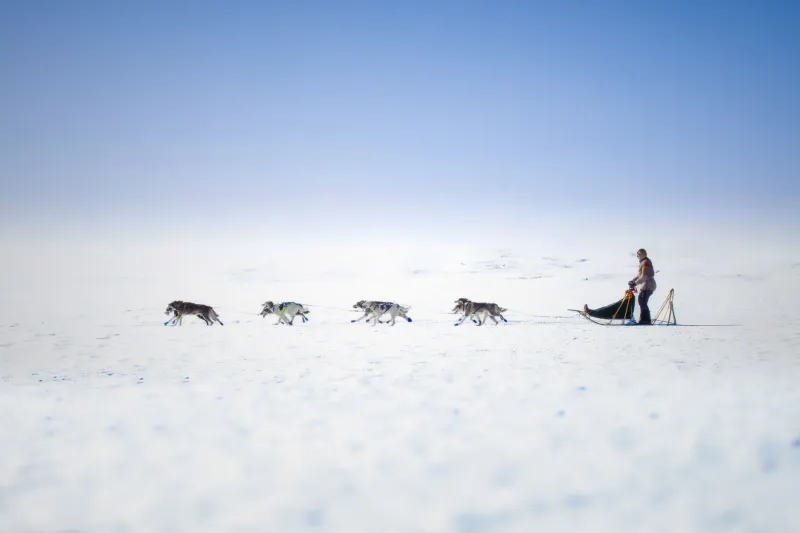
The Yukon Quest has never been a technophobe's race. Satellite tracking, veterinary monitoring systems, digital communications — all of it has made the 1,600-kilometre route between Whitehorse and Fairbanks safer and more transparent than it was in the early years. Mushers today have access to weather data, trail condition reports, and GPS mapping that would have seemed like science fiction to the race's founders in 1984.
And yet, talk to enough serious Quest competitors and a counterintuitive pattern emerges. The more technology available, the more some mushers are consciously pulling back from it — not out of nostalgia or stubbornness, but out of hard-earned respect for what their dogs can do that no device can replicate.
"The GPS tells you where the trail is supposed to be," says Whitehorse-based musher and two-time Quest finisher James Okalik. "The dog tells you where the trail actually is right now, in this weather, at this moment. Those aren't always the same thing."
It's a distinction that sounds simple but carries enormous weight in practice. The Yukon Quest trail is not a static route. It shifts with weather, ice conditions, and the passage of other teams. A GPS loaded with last year's waypoints is working from a map that may no longer match the terrain. A dog's nose, ears, and instincts are processing real-time information that no satellite can capture.
What Dogs Actually Know
To understand why experienced mushers are leaning into dog-led navigation, it helps to understand what sled dogs are actually doing when they're on trail.
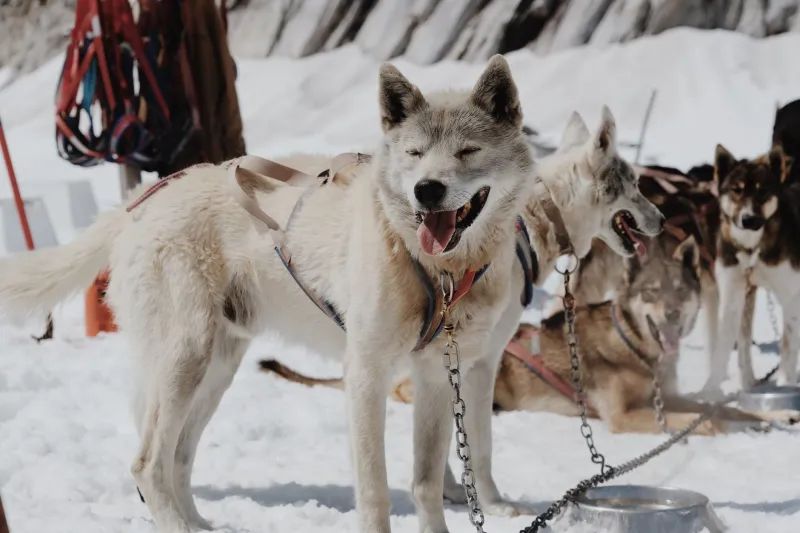
Lead dogs — the animals positioned at the front of the team — are not simply running. They're reading. Scent trails left by previous teams, subtle variations in snow texture that indicate different ice thickness beneath, the behaviour of wildlife that might signal a change in conditions ahead. They're also attuned to their musher in ways that are difficult to fully articulate, picking up on subtle cues in voice and body language that communicate trust or anxiety.
Dr. Meredith Foss, an animal behaviour researcher who has spent time studying working dog teams in northern Canada, describes lead dogs as "embodied environmental sensors" — a phrase that sounds academic but captures something real. "They're integrating information from multiple sensory channels simultaneously and making navigational decisions based on that integration," she explains. "It's not mystical. It's just a form of intelligence that we're not always good at recognizing because it doesn't look like our own."
For mushers, learning to recognize and trust that intelligence is a skill that takes years to develop. And it requires something that doesn't come naturally to competitive athletes: letting go of control.
The Psychology of Letting Go
Vanleer is candid about how hard that is.
"We train for years to be in charge," she says. "To make the call, to have the plan, to know the route. And then you're out there at two in the morning in a whiteout and you have to actively choose not to be the one making decisions. That's genuinely difficult."
Okalik frames it slightly differently. For him, it's less about relinquishing control and more about expanding the definition of what his team is. "I don't think of it as me versus the dogs, or me deferring to the dogs. I think of it as us. We're navigating together. I'm reading them reading the trail. That's the whole thing."
This kind of integrated thinking — athlete and animal as a unified system rather than handler and tool — is something that Quest veterans often describe as a turning point in their development as mushers. It's also, notably, something that can't be shortcut by better equipment.
"You can buy a better GPS," says Okalik. "You can't buy a better relationship with your lead dog. That takes time and it takes trust going both ways."
Moments Where Low-Tech Won
The Quest's history is scattered with stories that illustrate this dynamic, though they don't always make the highlight reels.
Mushers describe lead dogs that have refused to cross river sections that looked solid, stopping dead and pulling back against the gangline, only for the ice to give way hours later under a different team. They talk about dogs who found buried trail markers in deep snow by scent alone, in conditions where human visibility was effectively zero. One musher, speaking informally at a Whitehorse community event last winter, described his dog navigating a section of trail that had been completely obscured by a fresh metre of windblown snow — finding the route by following the slight depression left in the snowpack from previous travel, invisible to human eyes but apparently legible to the dog.
None of these moments appear in any GPS log. They exist in the memories of the mushers who lived them, and in the informal oral tradition that runs through the Quest community.
What This Tells Us About the Race
There's something distinctly Canadian about this aspect of the Yukon Quest — a willingness to sit with complexity, to hold space for both the technological and the intuitive without insisting one must replace the other.
The race has always existed at the intersection of the modern and the ancient. It was designed that way, built on a route that traces old trading and communication trails used by First Nations peoples and later by gold rush prospectors. The dogs themselves carry bloodlines shaped by thousands of years of partnership with humans in northern environments. GPS is, in the grand timeline of that relationship, a very recent addition.
Vanleer puts it plainly: "The technology is useful. I'm not throwing my GPS in a snowbank. But it's a tool, not a partner. Koda is a partner. And when I had to choose between them that night, I chose right."
She pauses, then adds: "He knew. He always knew."
Out on the Yukon Quest trail, where the margin between a good decision and a dangerous one can narrow to almost nothing, that kind of knowing is worth more than any screen can show.