Signal and Silence: The Invisible Web Keeping Mushers Alive Across a Thousand Miles of Nothing
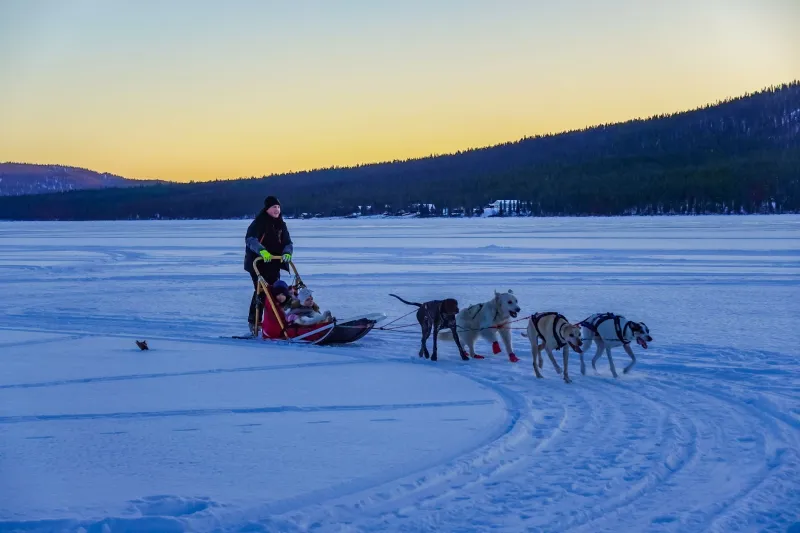
There's a stretch of the Yukon Quest trail — somewhere past the Eagle summit, where the wind scours the ridgeline clean and the temperature can nosedive past minus forty — where your phone becomes a paperweight. No bars. No GPS ping. No reassuring little dot on a tracking app. Just you, your dogs, and whatever the North decides to throw at you next.
For fans watching from home in Whitehorse or Vancouver, the race tracker on their laptop might stutter, refresh, and then go still. For race officials back at headquarters, that stillness carries a specific kind of weight.
"You learn to read the silences," says one veteran race communications coordinator who has worked the Quest for over a decade. "A gap in the signal isn't always an emergency. But you're always asking yourself — is this a dead zone, or is this something else?"
The answer to that question depends on a communication system that's equal parts high technology and old-fashioned human reliability. And understanding how it works reveals something essential about what makes the Yukon Quest different from almost every other endurance race on the planet.
The Backbone Nobody Sees
The Quest's communication infrastructure isn't a single system — it's a layered network stitched together from satellite tracking devices, VHF radios, Iridium satellite phones, and a volunteer corps of licensed ham radio operators whose dedication to the race borders on devotion.
Every musher carries a GPS tracker that transmits position data at regular intervals, feeding the public-facing race tracker that fans follow obsessively. But that system has gaps — literal geographic gaps where satellite coverage thins out and signal simply doesn't reach. The trail runs through some of the most topographically complex terrain in North America, and mountain ridges don't care about race management protocols.
That's where the ham radio operators come in. Positioned at checkpoints and at strategic points along the trail, these volunteers — many of them holding their licences for decades — form a human relay network that predates GPS by generations. They're the ones who confirm a musher arrived safely when the tracker went dark three hours earlier. They're the ones who relay a vet's assessment from a remote checkpoint back to race headquarters. In a pinch, they're the ones who coordinate search and rescue.
"Ham radio is old technology, but it's robust technology," explains one operator who has staffed the Carmacks checkpoint for years. "Satellites can fail. Software can crash. A well-maintained radio and someone who knows how to use it? That's still the most reliable thing out there in some of these locations."
The Eerie Quiet of a Dead Zone
Mushers themselves have a complicated relationship with the communication blackouts. Ask enough of them and you'll hear two very different reactions.
Some find the silence genuinely unsettling. After hours of checking in — touching base at checkpoints, knowing that race officials have a rough sense of where you are — entering a dead zone feels like stepping off a map. One Canadian musher described it as "that feeling when you're a kid and you realize nobody knows where you are. Except you're also exhausted and it's dark and you're on a mountain."
Others, though, describe those stretches with something closer to reverence. The Quest has always marketed itself on the authenticity of its isolation — this isn't a race where a support crew is waiting around every corner. The moments when technology drops away and it's just the musher, the dogs, and raw wilderness are, for many competitors, the whole point.
"When the tracker goes quiet, that's the real race," one multi-year finisher said. "Nobody's watching. Nobody can help you. You figure it out yourself, or you don't."
Race management, for its part, has to hold both of those truths at once. Preserving the authentic wilderness experience is central to the Quest's identity. So is making sure everyone comes home.
Satellite Devices and the Limits of Modern Tech
Beyond the GPS trackers, most mushers now carry personal satellite communicators — devices like the Garmin inReach series that allow two-way text messaging via satellite network. These have quietly transformed the safety calculus of long-distance mushing over the past decade, giving competitors a way to call for help that doesn't depend on being within range of a checkpoint or a radio operator.
But even these have limits. Battery life in extreme cold is a persistent challenge — lithium batteries lose capacity rapidly below minus twenty, and minus forty can render a device functionally useless if it hasn't been kept warm. Mushers learn to tuck devices inside their parkas, to rotate batteries, to treat their communication gear with the same careful attention they give their dogs' booties.
Race officials are also careful not to let the availability of satellite messaging create a false sense of security. A distress message still has to be received, interpreted, and acted upon — and in the deep wilderness, the response time can be measured in hours, not minutes.
"Technology gives you more options," one official noted. "It doesn't give you more time."
The Human Layer
What holds the whole system together, ultimately, isn't hardware. It's people.
The checkpoint volunteers who stay up through the night watching for headlamps on the trail. The ham radio operators who keep their sets warm and their ears open through multi-day shifts. The race vets who relay medical updates through three layers of communication just to make sure the message gets through. The officials at headquarters who track every musher's last known position on a whiteboard that functions as a low-tech backup to every digital system in the room.
There's something deeply Canadian about this arrangement — a vast, indifferent landscape managed not by technology alone but by a community of people who simply care enough to show up and stay. The Quest trail runs through First Nations territory that has been navigated by human knowledge and human networks for thousands of years. The communication web that keeps the modern race running isn't so different in spirit: it's people watching out for people, using the best tools available.
When the Signal Comes Back
For fans watching the tracker, there's a particular relief when a musher's dot reappears after a long silence. The icon moves again, ticking toward the next checkpoint, and you exhale without quite realising you'd been holding your breath.
For the musher, the return of signal is its own small moment. A checkpoint comes into view. A radio crackles. Somewhere far away, a coordinator updates a whiteboard and moves on to the next concern.
The wilderness gives you back, and the web closes around you again — invisible, imperfect, and somehow enough.
That's the Yukon Quest in miniature, really. Not a race that promises comfort or certainty, but one that trusts its people — mushers, volunteers, officials, and operators alike — to hold the line where the trail meets the wild.